

Attributes of Online Privacy in the Modern Internet
Understanding Data Collection
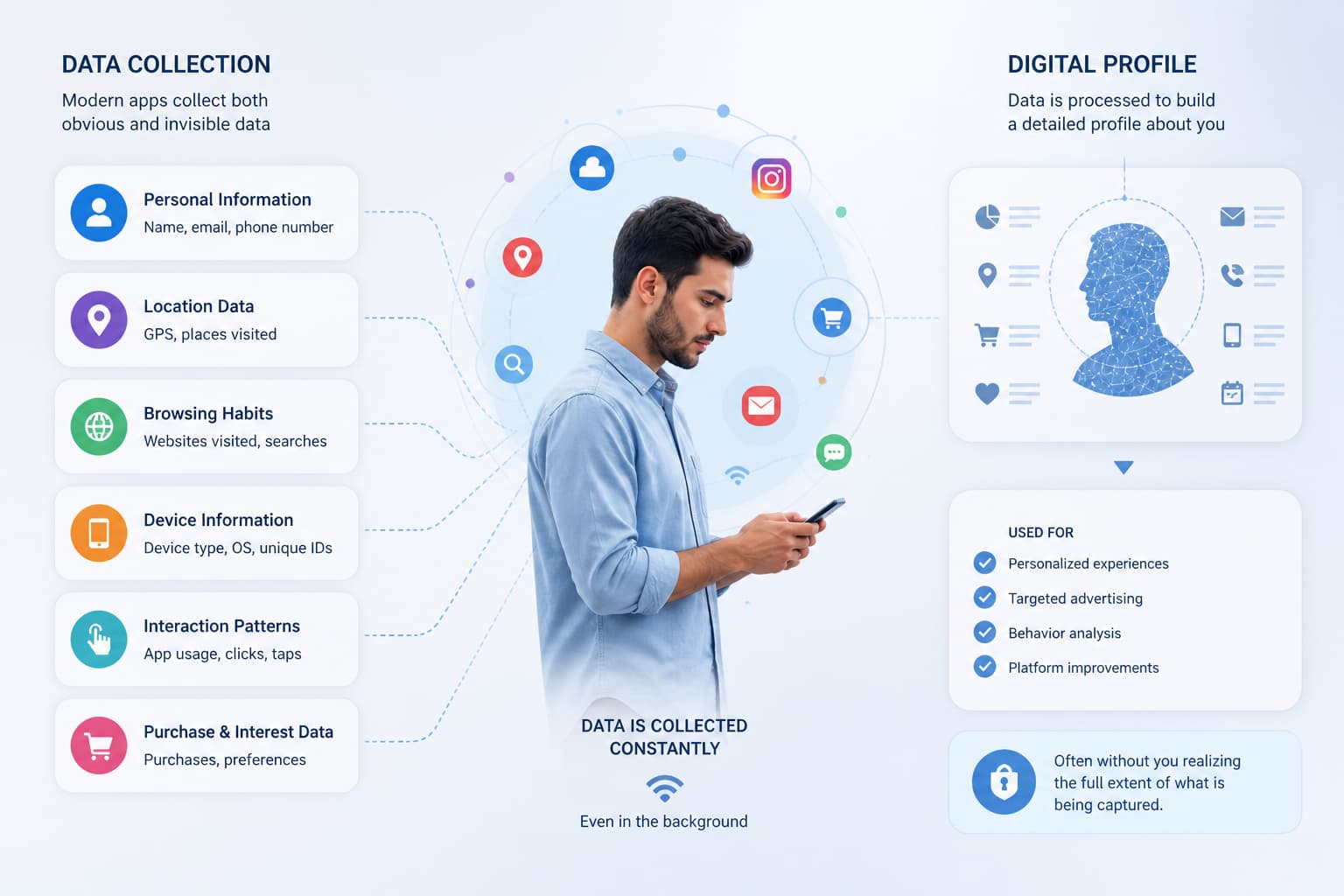
Most modern applications are built to collect user data as part of their core functionality.This includes obvious data such as names, emails, and phone numbers. However, it also includes less visible information like location, browsing habits, device details, and interaction patterns.Even when users are not actively providing information, apps continue to gather data in the background.This constant collection allows platforms to build detailed digital profiles, often without the user fully realizing the extent of what is being captured.
The Illusion of Control
Many platforms provide privacy settings, giving users the impression that they are in control of their data.However, these settings are often limited, complex, or designed in a way that encourages users to accept default options.In most cases, the default settings favor data sharing rather than restriction.As a result, users may believe they have secured their information, while in reality, a significant amount of data is still being collected and used.
Trading Privacy for Convenience
One of the main reasons privacy is declining is the exchange between convenience and data.Users enjoy personalized recommendations, faster services, and seamless experiences. But these features depend on access to personal data.For example, navigation apps require location data, social platforms require behavioral data, and online stores track browsing patterns to suggest products.While these services improve user experience, they also require users to give up a level of privacy—often without fully understanding the trade-off.
The Myth of Private Browsing
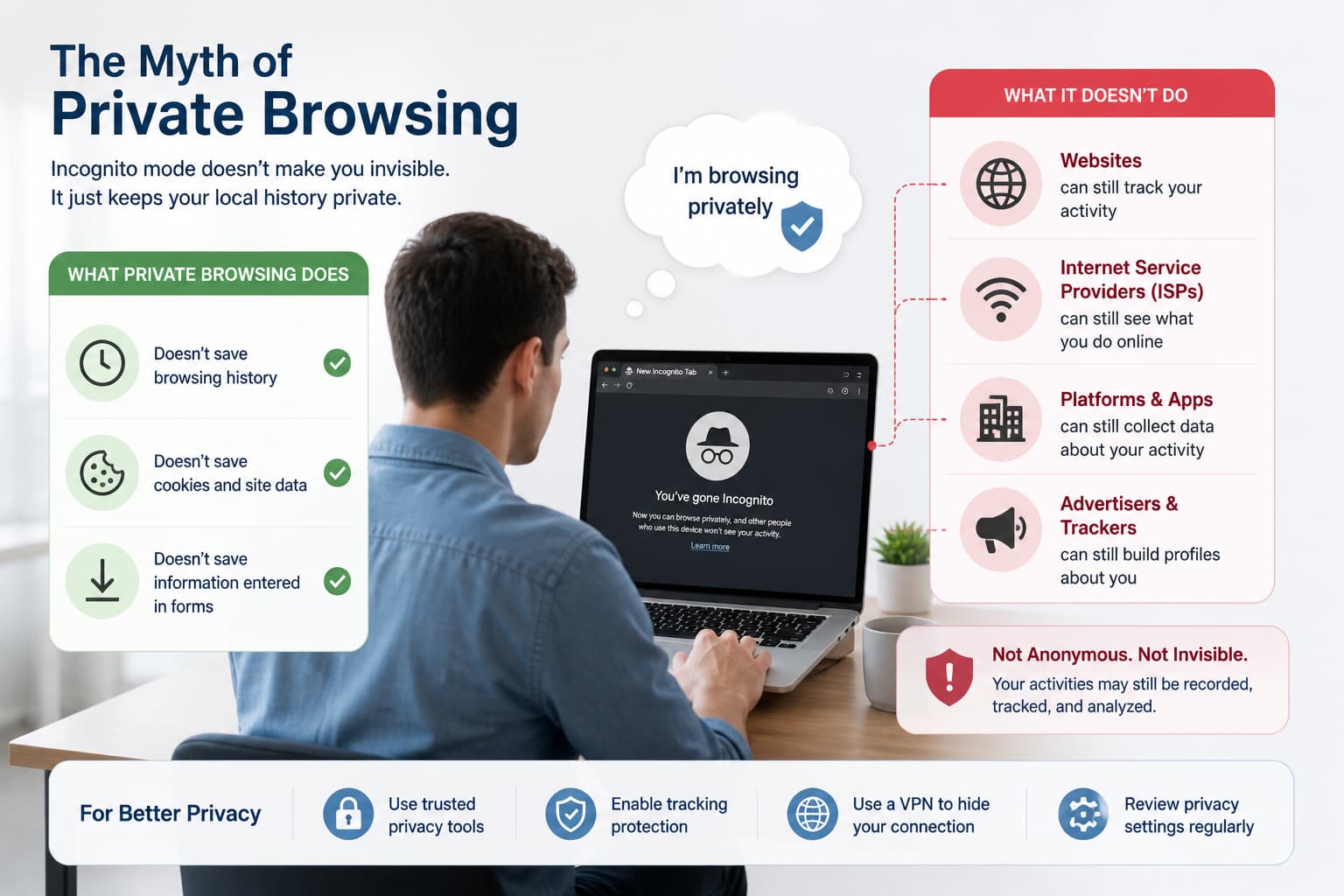
Many users rely on private or incognito browsing modes, believing they provide full privacy.In reality, these modes only prevent local data from being stored on the device. They do not stop websites, internet service providers, or platforms from tracking activity.This creates a false sense of security.Users may assume they are browsing anonymously, while their actions are still being recorded and analyzed by external systems.
What Truly Happens to Your Data?
Collected data is not just stored it is actively used.It can be used to:
personalize content and recommendations
target advertisements
improve platform algorithms
analyze user behavior trendsIn some cases, data may also be shared with third parties, depending on platform policies.This means that information provided in one place can influence what you see across multiple platforms.
How to Protect Your Privacy as a User
While complete privacy may be difficult to achieve, users can take steps to reduce unnecessary exposure.Be mindful of the permissions you grant to apps and only allow what is necessary.
Review privacy settings regularly instead of relying on default configurations.
Avoid sharing sensitive information on platforms that do not require it.
Use trusted tools such as secure browsers and privacy-focused extensions.
Stay informed about how different platforms handle user data.