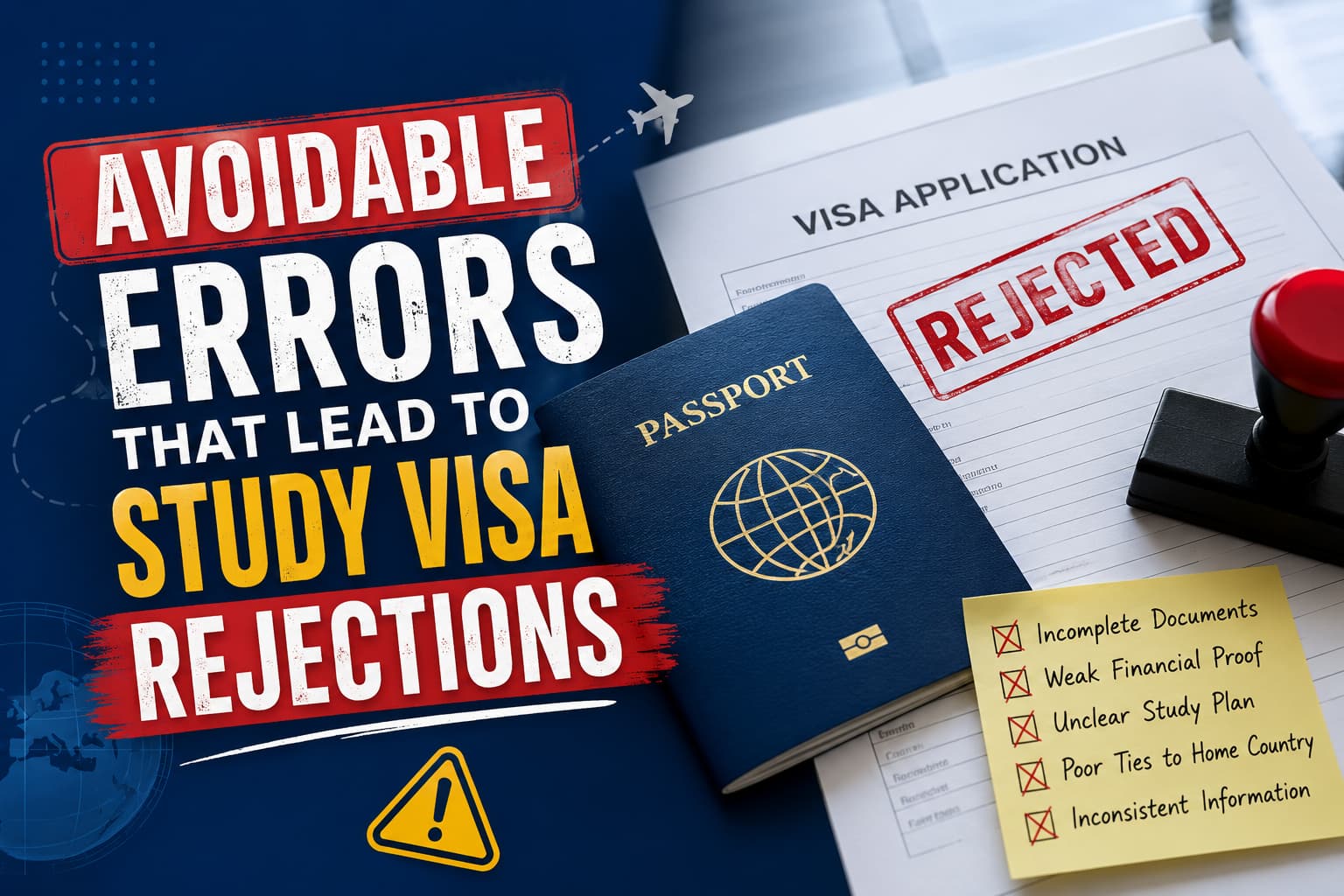
Common Mistakes That Lead to Study Visa Rejections
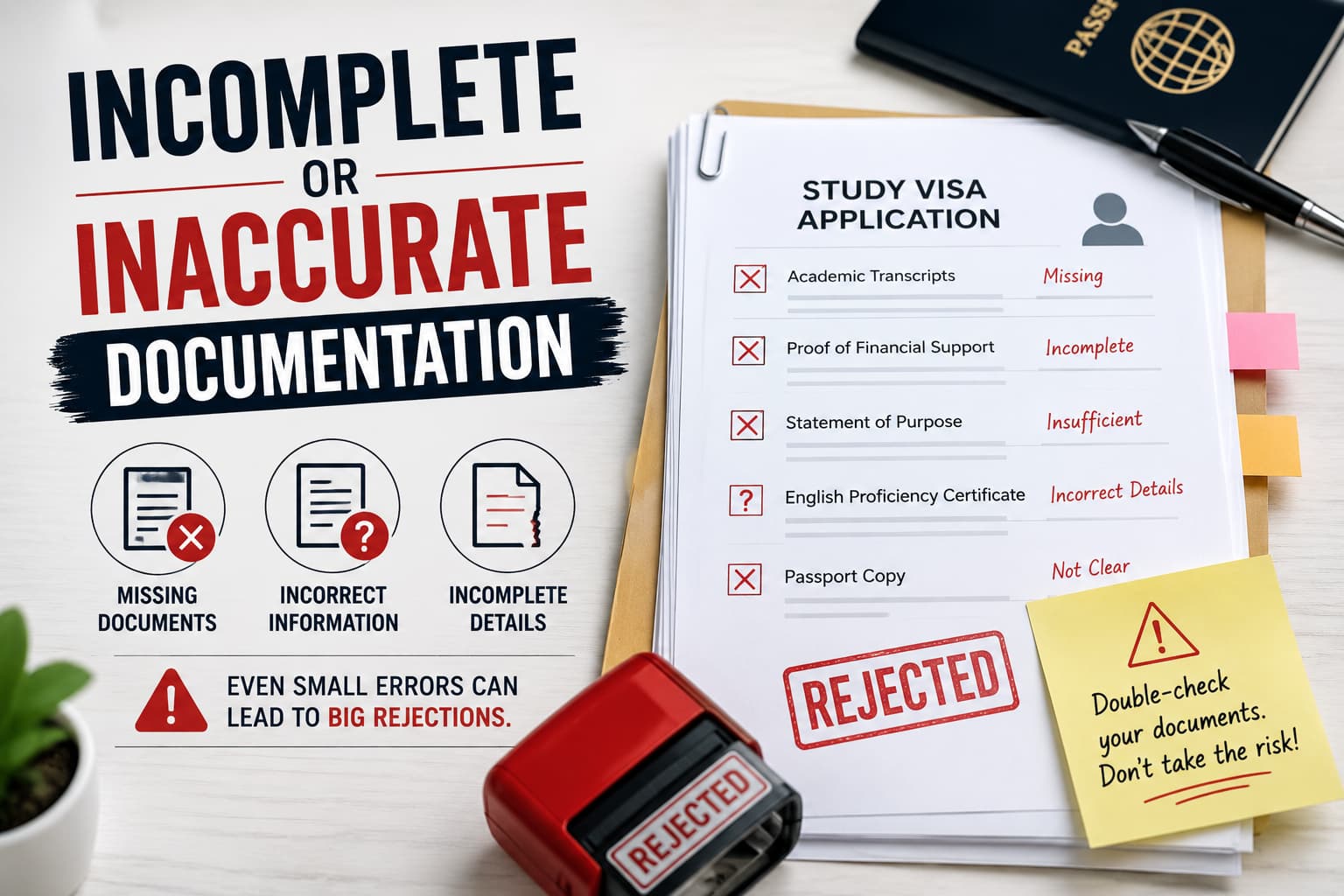
Incomplete or Inaccurate Documentation
One of the most frequent causes of visa rejection is the submission of incomplete or incorrect documents. Immigration authorities require precise and verifiable information. Missing academic transcripts, invalid passports, or inconsistencies in personal details can immediately weaken an application. A poorly organized document set also creates the impression of carelessness, which may raise doubts about the applicant’s seriousness.
Weak Statement of Purpose (SOP)
The Statement of Purpose plays a decisive role in communicating the applicant’s intentions. A vague, generic, or poorly structured SOP fails to convince visa officers of the student’s academic goals. Applicants often make the mistake of writing overly emotional or irrelevant narratives, failing to clearly link their chosen course to their career plans, and not explaining why they selected a specific country or institution. A strong SOP should be logical, focused, and aligned with long-term objectives.
Insufficient Proof of Financial Capacity
Financial evidence is crucial in demonstrating that the applicant can support themselves throughout their studies. Many applications are rejected due to inadequate bank balances, unverified sources of funds, or suspicious financial transactions such as sudden large deposits. Visa officers must be convinced that the student will not become a financial burden or resort to unauthorized work.
Lack of Strong Ties to Home Country
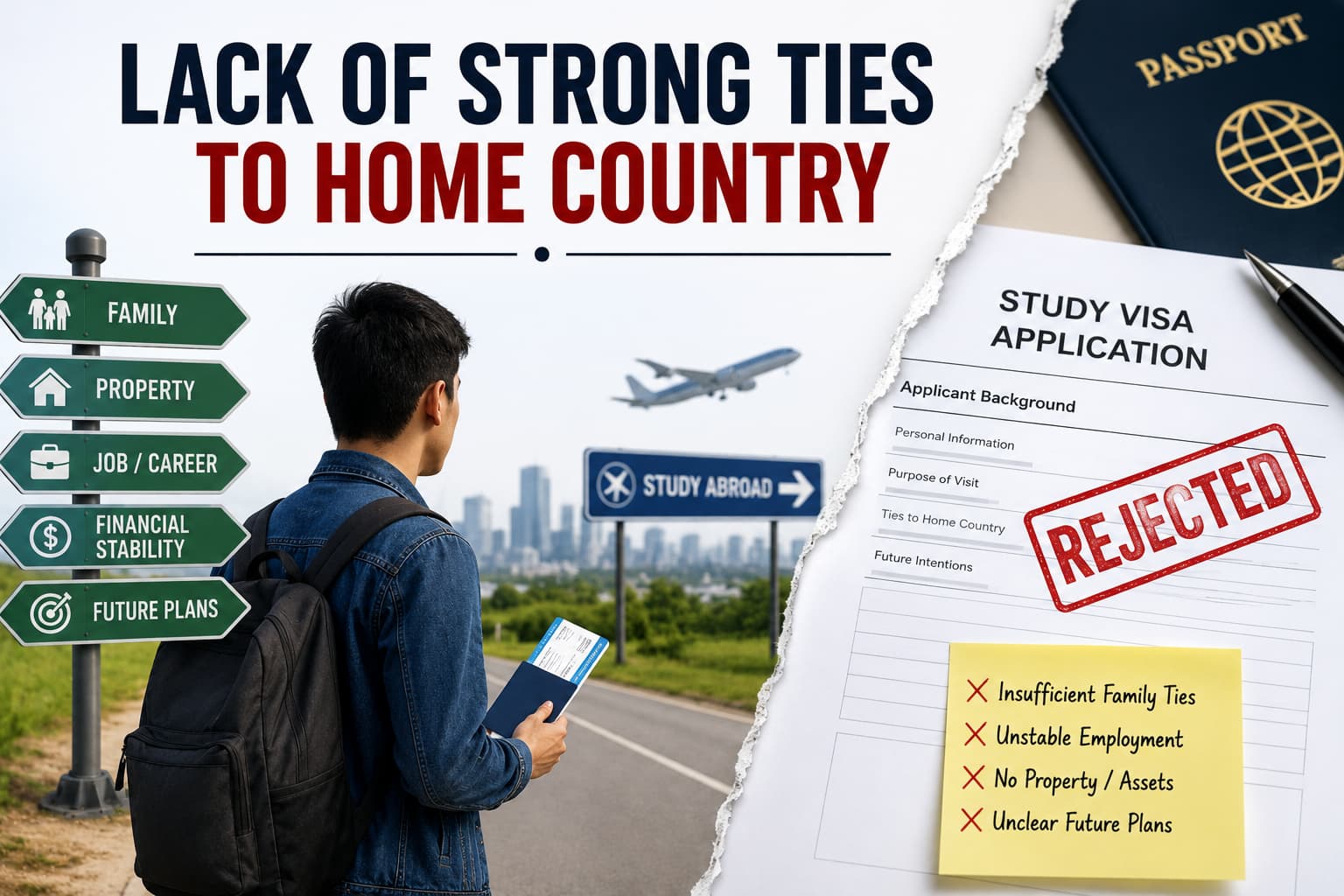
A major concern for immigration authorities is whether the applicant intends to return home after their studies. If strong ties are not evident, the application may be denied. Weak ties may include no clear career prospects in the home country, lack of family, property, or business connections, and absence of a convincing post-study plan. Applicants must demonstrate that their study abroad experience is temporary and purposeful.
Choosing an Inappropriate Course of Study
Selecting a course that does not align with previous education or work experience raises red flags. For example, a student with a background in engineering applying for an unrelated program without proper explanation may appear unfocused. Visa officers expect a logical academic progression, not random or unjustified changes in direction.
Poor Interview Performance (Where Applicable)
In countries that require visa interviews, poor communication can negatively impact the outcome. Common issues include nervousness leading to unclear responses, contradicting information already submitted in documents, and inability to explain study plans confidently. The interview is an opportunity to reinforce credibility, and poor performance can undermine an otherwise strong application.
Submitting Fraudulent or Misleading Information
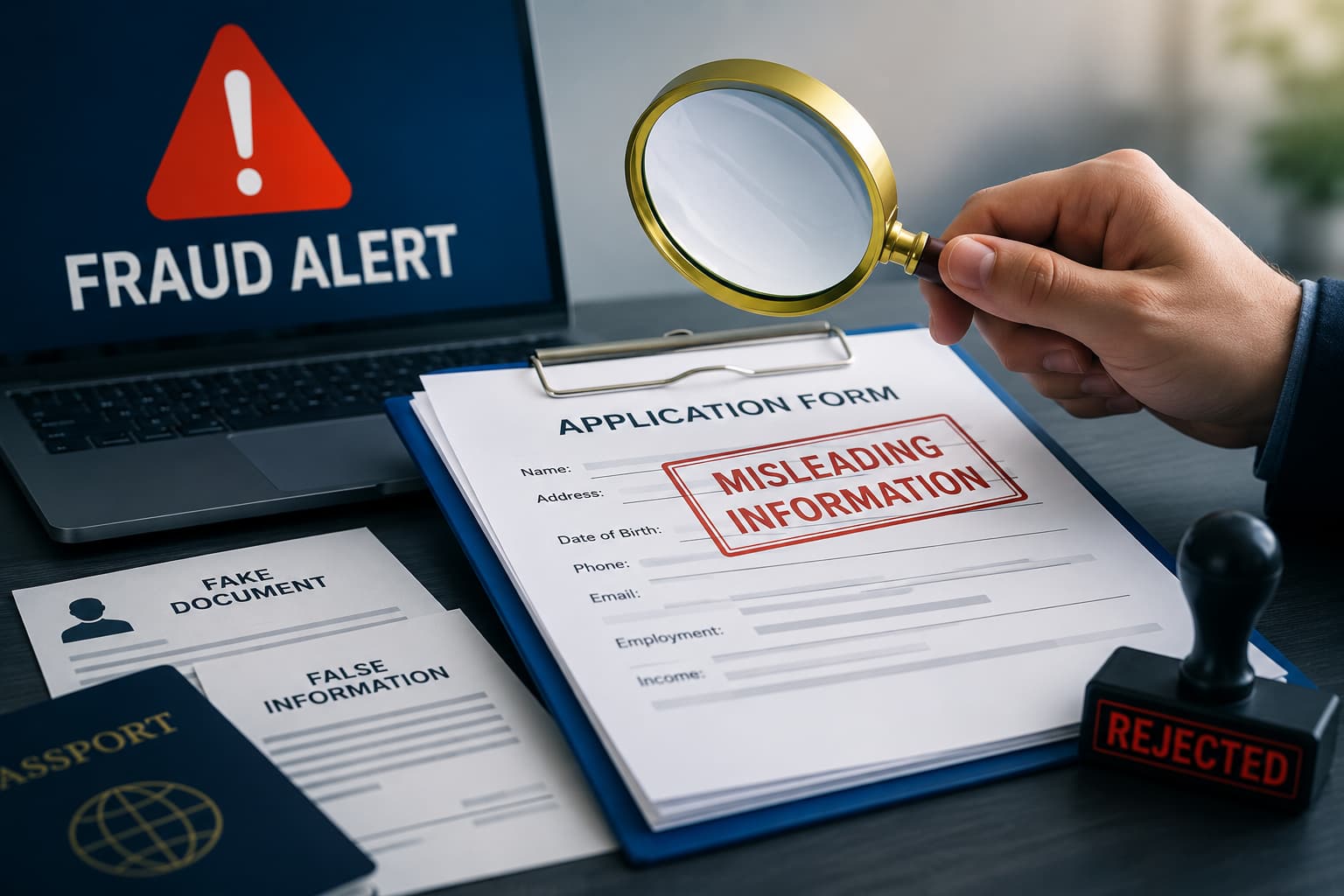
Providing false documents or misleading information is one of the most serious mistakes an applicant can make. This includes fake admission letters, altered financial statements, and misrepresentation of qualifications. Such actions not only result in immediate rejection but may also lead to long-term bans from applying again.
Late or Poorly Prepared Applications
Rushing the application process often leads to errors, omissions, and weak documentation. Many students underestimate the time required to gather and verify all necessary materials. Early preparation allows for careful document review, stronger SOP development, and better financial planning.