
It started as a Tuesday night.Sean, a 29-year-old backend engineer at a mid-size fintech company, sat down after dinner to watch "one video" about mechanical keyboards. He had a work deadline the next morning. He remembers picking up his phone at 9:15pm.The next time he looked at the clock, it was 12:47am.He had watched a keyboard video, then a workspace setup tour, then a minimal living philosophy video, then three videos about someone quitting their corporate job to build furniture in Portugal, then a 40-minute documentary about the fishing industry in Norway. He had not searched for any of them. He had not consciously decided to watch any of them. Each one simply appeared, perfectly timed, perfectly calibrated to the emotional direction his attention was already moving.He told me he sat there feeling genuinely unsettled. Not because he had wasted three hours. But because he could not identify a single moment in those three hours where he had made a choice.This is not a story about distraction. It is a story about infrastructure.
What the Algorithm Already Knows Before You Open the App
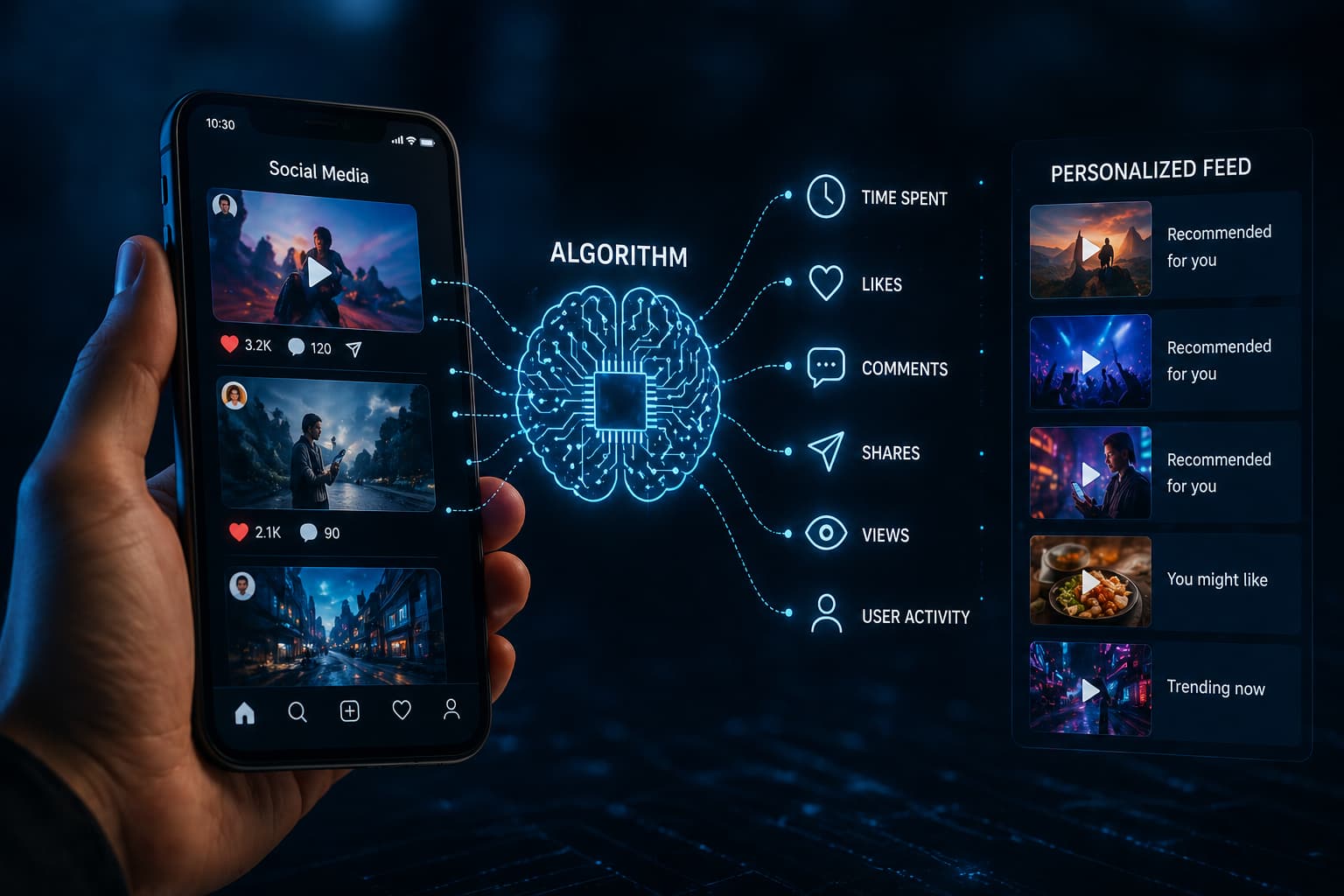
Here is something most users do not realize: by the time you open a platform, the system has already decided what it is going to show you.Not roughly. Not approximately. With the precision of a model that has processed your last 10,000 interactions, your scroll velocity, the content categories where your dwell time spikes, the exact emotional register that makes you pause versus skip, and the time of day when your resistance to continued engagement is statistically lowest.You are not a user navigating a feed. You are a behavioral profile receiving a personalized environment.
Empirical work by Mathur et al. (2019), covering over 53,000 product pages across more than 11,000 domains, found that design elements specifically built to exploit cognitive biases appeared on roughly 35% of sites studied -- rising to 45% on the highest-traffic platforms. Those are not bugs. They are not oversights. They are the result of optimization.The biases being targeted are not exotic. They are anchoring, scarcity perception, social proof, the default effect, and optimism bias -- the same fast-thinking shortcuts that let humans make decisions quickly in uncertain environments for most of evolutionary history. They are foundational features of human cognition, and they are being used as levers.This is what engineers in this space are actually building. Not just products. Environments designed around the predictable failure modes of the human brain.

Your Brain on the Feed: A Mechanism, Not a Metaphor
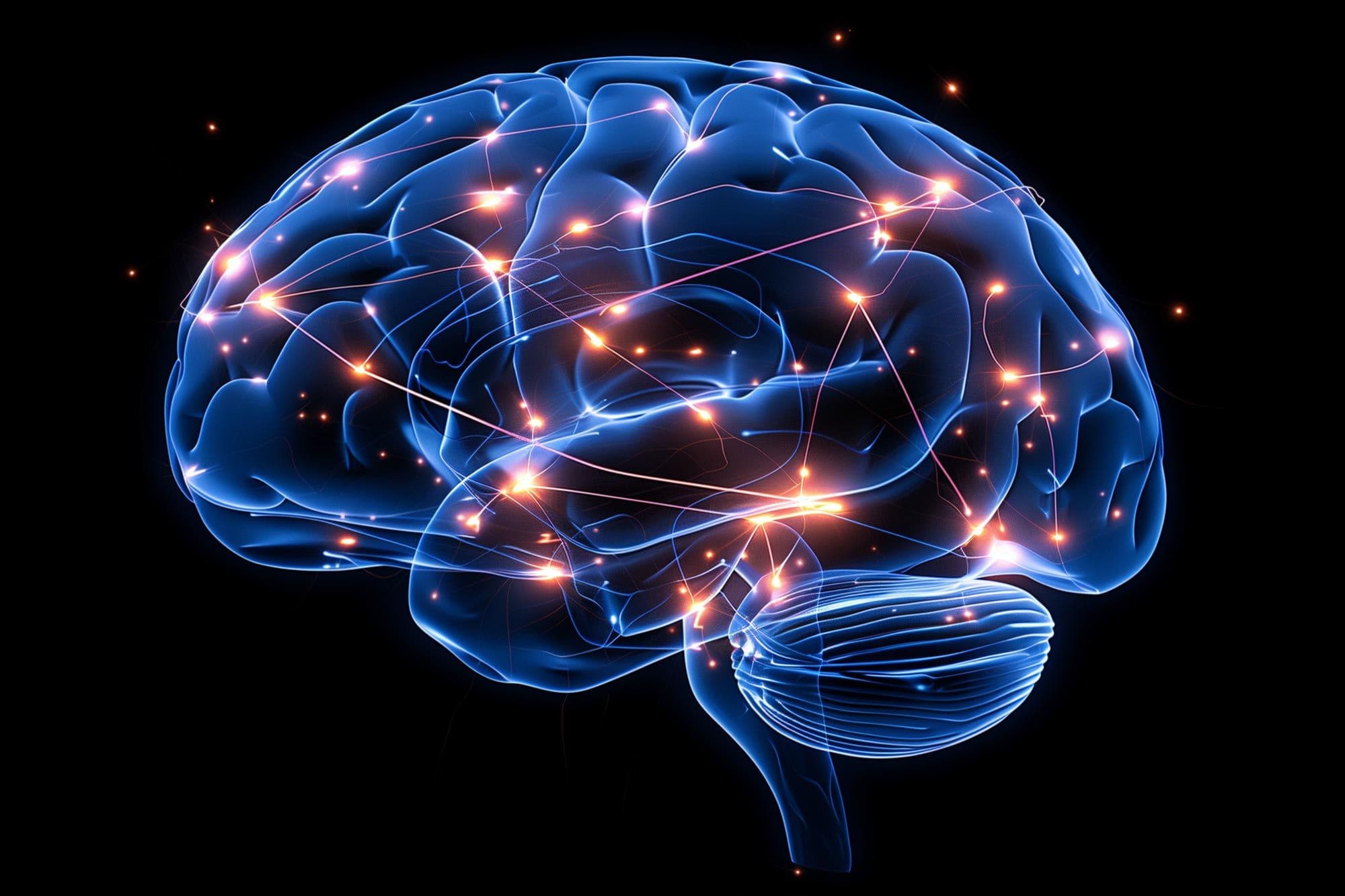
Popular writing reaches for the word "addictive" like it is doing something precise. It is not. Let's be precise.When you scroll and pause on something interesting, your mesolimbic dopamine pathway activates. Specifically, neurons in the ventral tegmental area fire and release dopamine into the nucleus accumbens -- the same circuit implicated in responses to cocaine, gambling, and food reward. This is not a colorful analogy. It is the same substrate.What makes the mechanism particularly effective is that dopamine does not spike on reward. It spikes on anticipated reward. The uncertainty of whether the next item will be interesting is neurochemically more powerful than the reward itself. Pull-to-refresh is not a UI pattern. It is a slot machine lever. Infinite scroll removes the natural stopping point that would allow the prefrontal cortex to reassert deliberate control. The notification badge is an unresolved anticipation cue designed to sit at the edge of your awareness until you act on it.A 2025 study published in the British Journal of Sports Medicine formalized this as "dopamine-scrolling" -- a public health phenomenon involving tolerance development, where users require escalating engagement to reach the same baseline state.
The Secondary Damage Nobody Talks About
The dopamine loop is the part people have started to hear about. The secondary effect gets less attention, and it is arguably more important for the people building these systems to understand.Chronic overstimulation of dopaminergic circuits is associated with measurable structural changes in the prefrontal cortex -- the region responsible for deliberate reasoning, impulse inhibition, long-form attention, and planning. Meta-analyses of neuroimaging data show that heavy platform users exhibit brain activation patterns that parallel substance use disorder profiles: elevated reward-circuit reactivity when anticipating engagement, and reduced prefrontal modulation of impulsive behavior.The brain being reshaped here is not a metaphor. It is the literal tissue that engineers and researchers use to do their work. The irony is not subtle.
The Three Layers of an Engineered Choice Environment
Understanding the neurobiology alone is not enough. The more important question for anyone working in this field is how the influence is actually operationalized in systems. It works across three interlocking layers.
Exposure control is the most visible. Recommendation systems do not present content neutrally. They apply learned attention models to surface material most likely to extend engagement, which means that what feels like an open information environment is actually a highly curated selection shaped by what the system has learned about your specific behavioral profile.
Temporal targeting is subtler. Notification delivery is not random or even based on message urgency. Modern systems model the windows in which individual users are most susceptible to re-engagement -- periods of low cognitive load, task transitions, or detected emotional shifts. The system is not trying to be convenient. It is hunting for the moments when your defenses are down.
Feedback loop amplification is the most consequential at scale. Systems optimizing for engagement discover, through iteration, that emotionally arousing content -- particularly outrage, moral threat, and social danger signals -- reliably outperforms calm or neutral content. No engineer decided this. The objective function discovered it. And because outrage outperforms, the system learns to surface more of it. This is not a conspiracy. It is an emergent property of what happens when you optimize a complex system against the wrong target.
Research published in Frontiers in Psychology in 2025 documented what the authors called a "behavioral paradox": users who demonstrate clear awareness that algorithmic feeds are curated and potentially manipulative still default to compliance at scale. Knowing the trick, it turns out, does not make you immune to it.

The Autonomy Argument, Done Properly
At this point someone always raises the objection: "But users choose to open these apps. Nobody forces them. Their autonomy is intact."This argument is technically accurate and practically useless.
Meaningful autonomy does not just mean the absence of physical coercion. It requires that the conditions under which choices are made have not been specifically engineered to bypass rational deliberation. A choice made inside an environment designed to exploit neurochemical vulnerabilities, suppress alternatives, and shape preferences through repetition is not a fully autonomous choice -- even if you could technically put the phone down.
Philosophers call this adaptive preference formation: the process by which what a person wants becomes shaped by the conditions of their environment, often entirely outside their awareness. When systems continuously surface certain content, suppress alternatives, and personalize inputs to match existing behavioral patterns, they do not just respond to your preferences. Over time, they constitute them.
The practical consequence is measurable: the longer a user interacts with a deeply personalized system, the smaller the gap between their stated preferences and the system's model of those preferences. At the limit, it becomes genuinely unclear whether you are expressing your own desires or expressing back what the system has trained you to want.For researchers working on recommendation systems, this is not an abstract philosophical puzzle. It is a direct question about what your training signal is actually optimizing for -- and whether engagement is a valid proxy for anything a user would endorse on reflection.
What Actually Works: Evidence, Not Platitudes
Most writing in this space identifies the problem clearly and then collapses into vague recommendations about "awareness" and "digital literacy." That is not useful. Here is what the research actually supports.
The 30-minute finding is one of the most replicated results in this literature. A University of Pennsylvania study found that limiting social media use to 30 minutes daily produced significant reductions in loneliness and depression -- not just reduced screen time, but measurable psychological improvement. The threshold appears repeatedly across studies as a meaningful inflection point. Below it, the dopaminergic feedback cycle begins to reset. Above it, the compulsive pattern reinforces. This is a number you can use.
Structural friction works; willpower does not. Scheduled app blocking, moving platforms off the home screen, turning off notification badges, batching check-ins to designated windows -- these interventions work not because they build discipline but because they insert a deliberate cognitive step between impulse and action. You are designing friction into your personal system to counteract friction removal in the platform. This is an engineering response to an engineering problem.
Ethical nudging exists and has been validated. Several research groups have demonstrated that choice architecture can be deployed for users rather than against them: features that surface usage summaries, prompt reflection before re-engagement, or offer alternative content modes. The barrier is not technical. The barrier is that organizations whose revenue depends on engagement time have no rational incentive to build features that reduce it.
Algorithmic transparency requirements are the policy lever with the most technical merit. The EU Digital Services Act (2022) represents the first serious legislative attempt to require large platforms to disclose what behavioral objectives their recommendation systems are optimizing for and to provide users with auditable alternatives. Implementation has been slow and contested. But the underlying demand -- that systems above a certain scale be legible to the people they affect -- is technically reasonable and overdue.
The most technically interesting frontier is reinforcement learning frameworks that substitute welfare proxies for engagement metrics: incorporating signals like session regret scores, stated preference divergence, and post-session self-report into the reward function. Early research suggests this is feasible. It is not deployed anywhere at meaningful scale, because it would reduce the numbers that currently define platform success.

The Asymmetry Nobody Wants to Name
Let's say clearly what is actually happening here.
On one side: some of the most technically sophisticated organizations ever built, with behavioral data at a scale and granularity that has no precedent in human history, running continuous A/B experiments on hundreds of millions of people simultaneously, employing dedicated researchers in persuasion science, behavioral economics, and cognitive psychology, iterating in real time against objective functions refined over years.
On the other side: a person with a phone.
This is not a fair contest. Framing it as a personal responsibility problem -- a self-discipline problem, a digital literacy problem, something individuals can solve by being more mindful -- is not just unhelpful. It is a deliberate misidentification of where the leverage actually is. It locates the failure in the least powerful party in the system.
The line between human decision and machine influence is not fading because people are insufficiently thoughtful. It is fading because highly sophisticated engineering has been applied, at scale, specifically to make that line hard to find.