

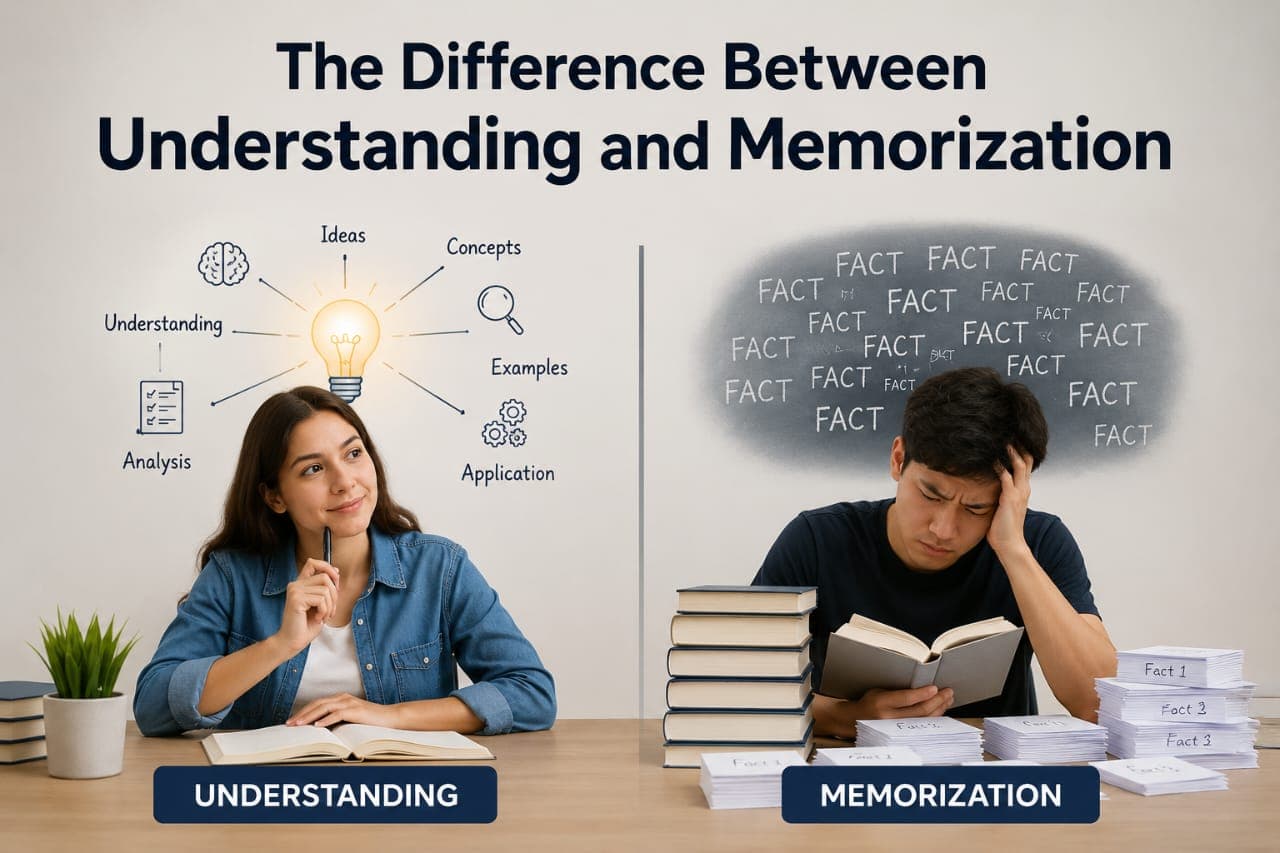
The Difference Between Understanding and Memorization
Memorization involves storing information in the mind for the purpose of recalling it later. A student may memorize formulas, definitions, dates, or theories without truly knowing how they work. Understanding, on the other hand, goes deeper. It means grasping the meaning behind the information and being able to apply it in different contexts.
Understanding Builds Long-Term Knowledge
One major weakness of memorization is that information is easily forgotten after examinations. When students truly understand a concept, however, the knowledge stays with them for a much longer time. Understanding creates meaningful connections in the brain, making it easier to recall information even after several months or years.
It Encourages Critical Thinking
Education is not only about passing examinations; it is also about developing the ability to think independently. Memorization often trains students to repeat information exactly as they were taught, while understanding encourages questioning, analysis, and reasoning.
Understanding Improves Problem-Solving Skills
In many subjects, especially Mathematics and the Sciences, students are often faced with application-based questions rather than direct theory questions. Understanding equips students with the ability to break down difficult questions and apply knowledge logically.

It Reduces Academic Pressure
Students who rely heavily on memorization often experience stress and anxiety because they try to remember too many details at once. Learning through understanding makes studying more meaningful and less frustrating.
Understanding Creates Independent Learners
One of the greatest benefits of understanding is that it helps students become independent thinkers. A student who understands how learning works can research independently, ask intelligent questions, and connect ideas from different subjects.