
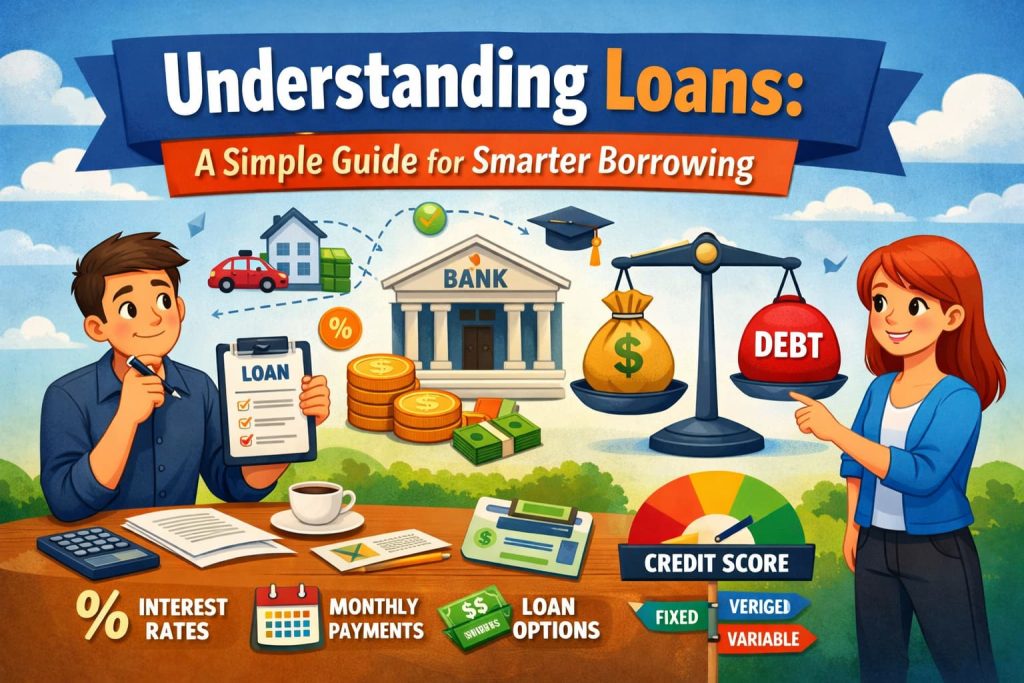
Understanding loans a simple guide for smarter borrowing
In today’s world, loans play a major role in helping individuals and businesses achieve their goals. Whether it’s buying a home, starting a business, or paying for education, loans can provide the financial support needed to move forward. However, borrowing money is a serious responsibility that requires understanding and careful planning.
What Is a Loan?
A loan is a sum of money borrowed from a lender (such as a bank or financial institution) with the agreement that it will be paid back over time, usually with interest. The borrower receives funds upfront and repays the amount in installments or as agreed.
Types of loans
There are several types of loans, each designed for different purposes:
Personal Loans: Unsecured loans used for various personal needs like medical bills, travel, or emergencies.
Mortgage Loans: Used to purchase property or real estate.
Auto Loans: Specifically for buying vehicles.
Student Loans: Designed to help pay for education-related expenses.
Business Loans: Used by entrepreneurs to start or expand a business.
Key Components of a Loan
Before taking a loan, it’s important to understand these key terms:
Principal: The original amount borrowed.
Interest Rate: The cost of borrowing, usually expressed as a percentage.
Loan Term: The duration over which the loan must be repaid.
Monthly Payment: The amount paid regularly until the loan is cleared.
Advantages of loans
Loans can be beneficial when used wisely:
- Provide immediate access to funds
- Help build credit history
- Enable large purchases that may not be affordable upfront
- Support business growth and investment
Risks and considerations
While loans can be helpful, they also come with risks:
- High interest rates can increase total repayment
- Missed payments can damage credit score
- Over-borrowing can lead to financial stress
- Hidden fees or unfavorable terms may exist
Tips for Smart Borrowing
To make the most of a loan, consider the following:
Assess Your Need: Only borrow what you truly need.
Compare Lenders: Look for the best interest rates and terms.
Understand the Terms: Read the fine print carefully.
Plan Repayment: Ensure you have a steady income to meet obligations.
Avoid Multiple Loans: Too many loans can become overwhelming.
Conclusion
Loans are powerful financial tools that can help you achieve important goals, but they must be handled with care. Understanding how loans work and making informed decisions can prevent financial difficulties and set you on a path toward financial stability.
References
Investopedia. (2023). Loan Definition. Retrieved from https://www.investopedia.com/terms/l/loan.asp
World Bank. (2022). Financial Inclusion and Access to Credit. Retrieved from https://www.worldbank.org
Consumer Financial Protection Bureau. (2023). What is a loan? Retrieved from https://www.consumerfinance.gov
Federal Reserve. (2022). Consumer Credit and Loans Overview. Retrieved from https://www.federalreserve.gov