
The Hidden Impact on Learning
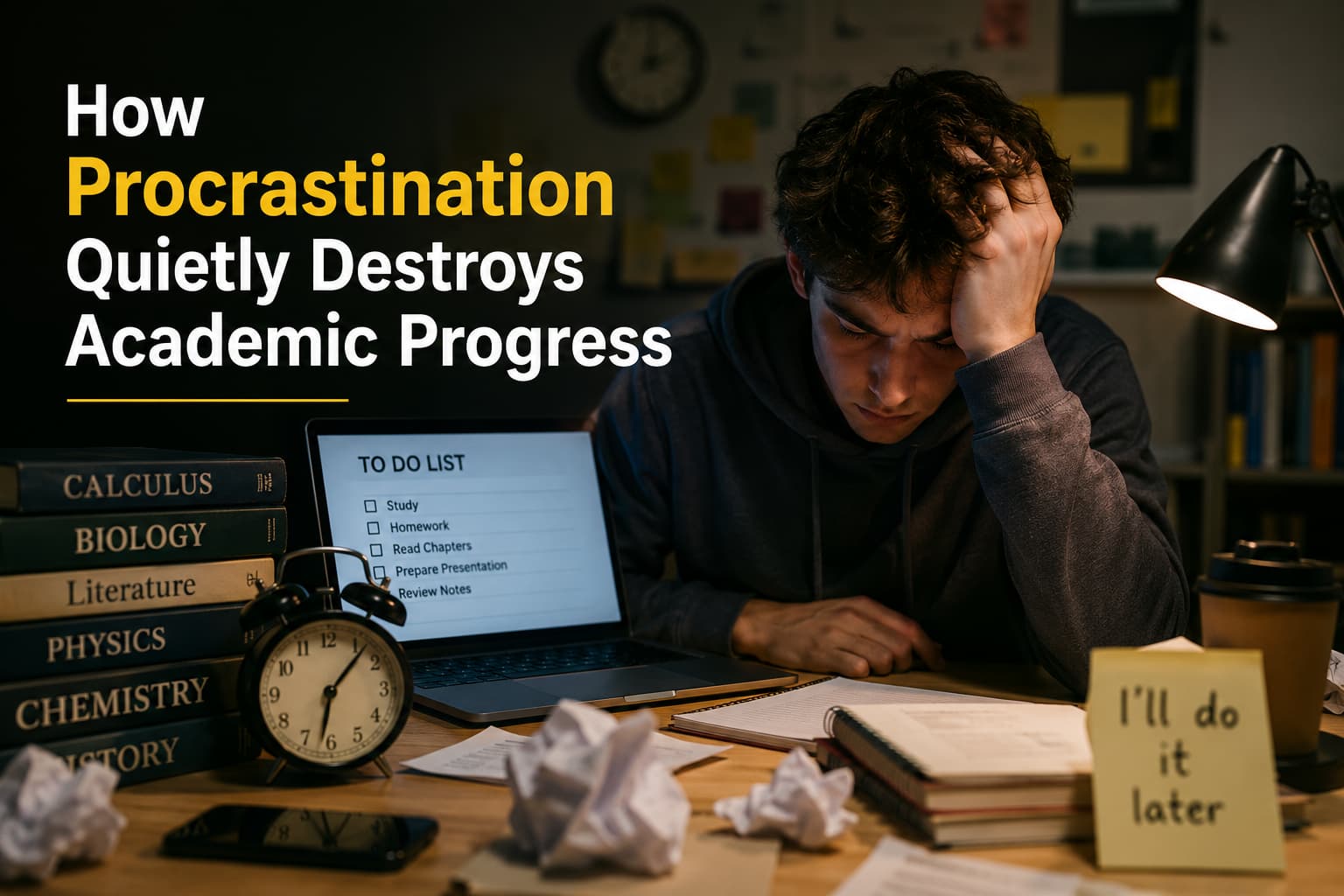
One of the most damaging effects of procrastination is its impact on learning. Effective learning requires consistency, repetition, and adequate time for understanding concepts. When students continually postpone their academic responsibilities, they reduce the amount of time available for meaningful learning.
As a result, they often resort to cramming before examinations. While cramming may help students remember information temporarily, it rarely leads to deep understanding or long-term retention of knowledge.

Increased Academic Stress
Procrastination creates unnecessary pressure. Tasks that could have been completed gradually become urgent deadlines. The closer these deadlines approach, the greater the level of anxiety and stress experienced by the student.
Decline in Academic Performance
Quality academic work usually requires planning, research, revision, and careful attention to detail. Students who procrastinate frequently deny themselves the time needed for these essential processes.
Loss of Valuable Opportunities
Academic success extends beyond classroom grades. Scholarships, internships, leadership positions, research opportunities, and professional development programs often require students to meet strict deadlines and maintain strong academic records.
Damage to Self-Confidence
Repeated procrastination can gradually affect a student's confidence. When deadlines are missed or academic goals remain unachieved, feelings of disappointment and frustration often follow.

The Role of Discipline in Overcoming Procrastination
Overcoming procrastination requires more than motivation. Motivation is often temporary and can fluctuate based on emotions or circumstances. Discipline, however, enables students to take action regardless of how they feel.
Building a Culture of Consistency
Academic excellence is rarely achieved through last-minute effort. Rather, it is the result of consistent actions performed over time.
Conclusion
Procrastination may appear harmless in the moment, but its long-term effects can be significant. By embracing discipline, consistency, and effective time management, students can protect their academic progress and unlock their full potential.