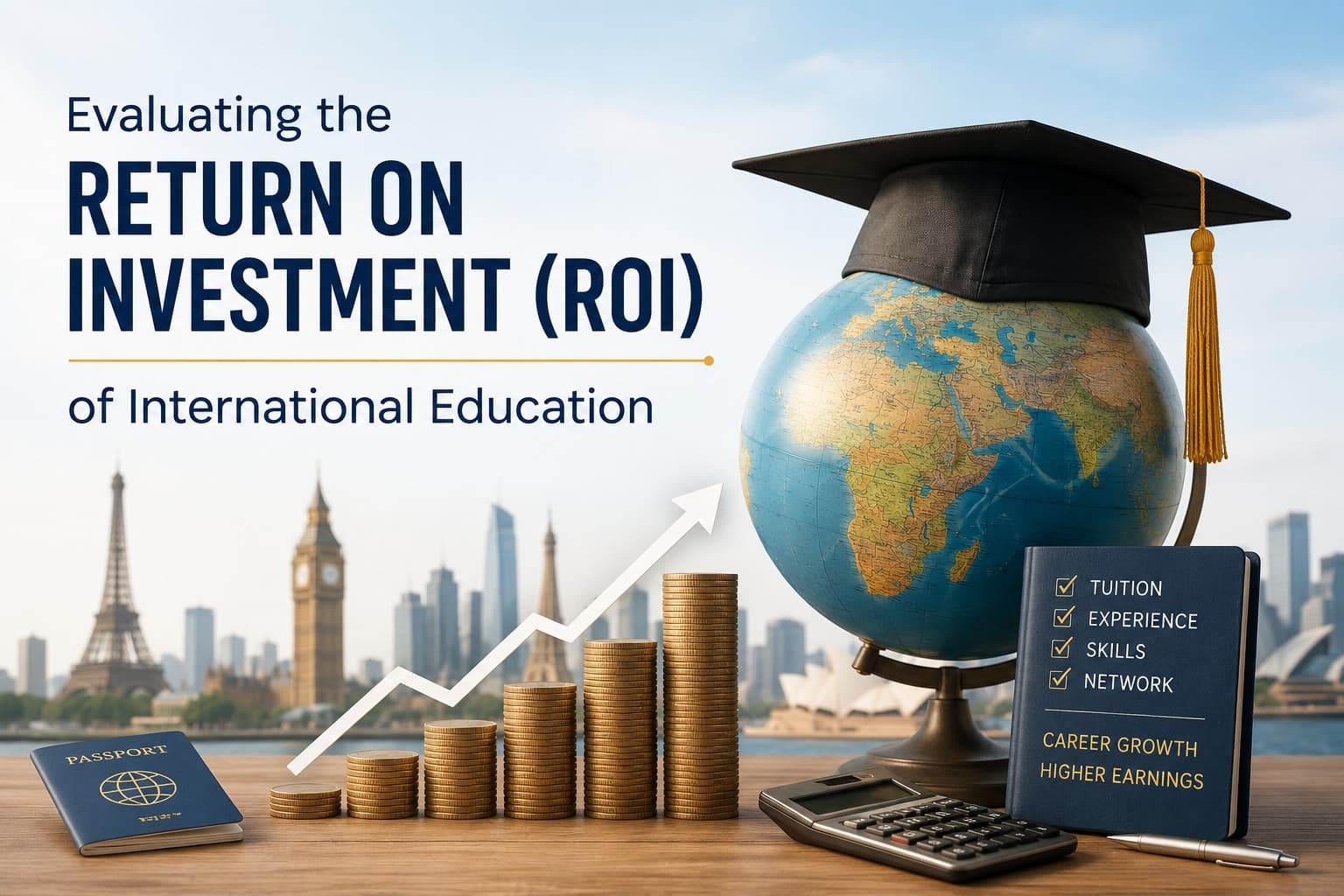
For many students, studying abroad represents one of the most significant investments they will ever make. Beyond the excitement of experiencing a new culture and earning an internationally recognized qualification, international education often requires substantial financial commitment. Tuition fees, accommodation, travel expenses, health insurance, and daily living costs can amount to substantial sums. Given these costs, it is important for prospective students and their families to evaluate whether studying abroad offers a worthwhile return on investment (ROI).
Return on Investment (ROI) refers to the value or benefits gained from an investment relative to the amount spent. In the context of international education, ROI extends beyond financial returns and includes career advancement, personal development, global exposure, professional networks, and long-term opportunities.
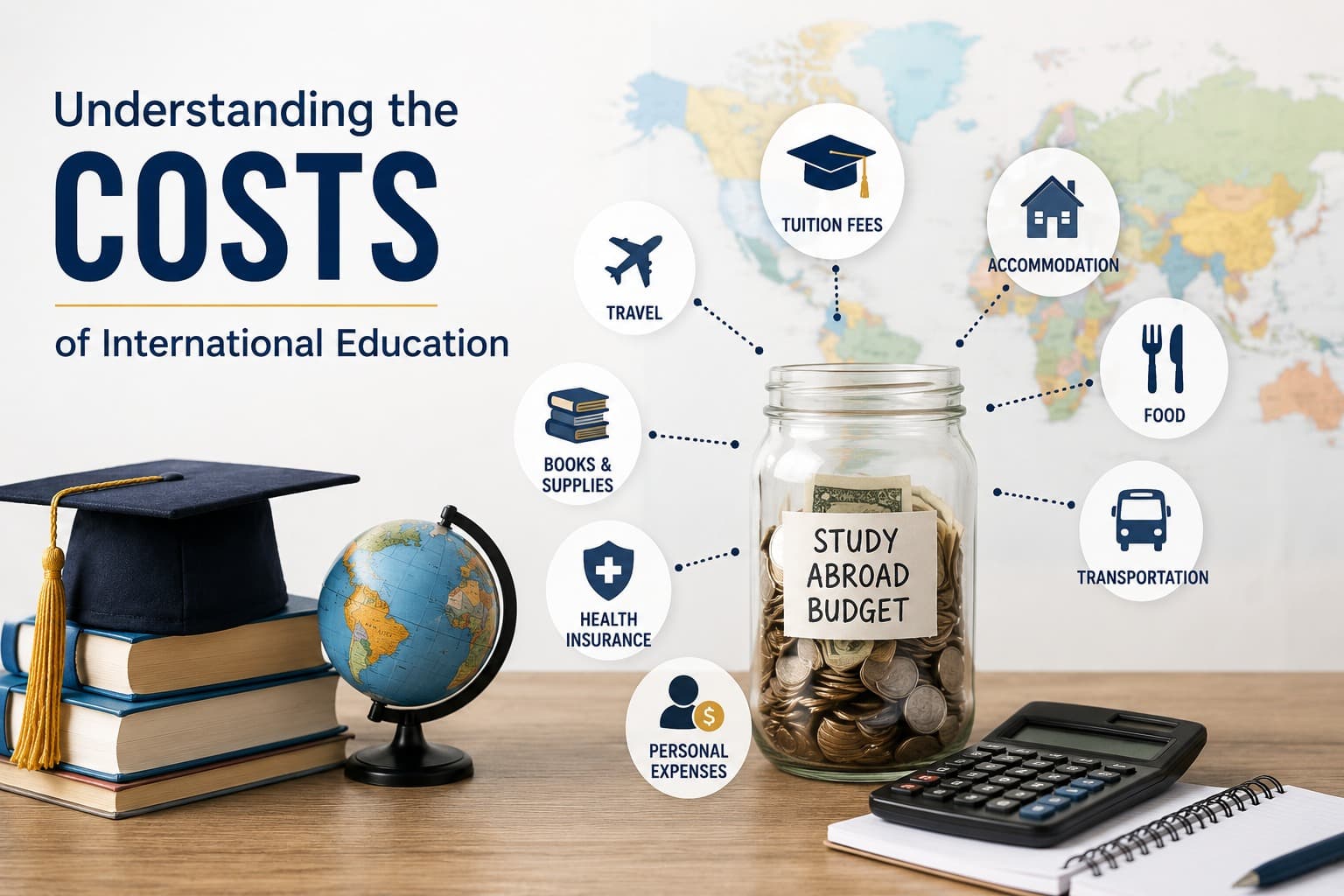
Understanding the Costs of International Education
Direct costs include tuition, accommodation, textbooks, visa application fees, health insurance, and transportation. Indirect costs may include lost income, currency exchange fluctuations, emergency expenses, and the opportunity cost of time spent studying instead of working full-time. A realistic evaluation begins with understanding the total cost rather than focusing solely on tuition fees.
Financial Returns and Career Prospects
Many students pursue international education to improve career opportunities. Graduates may gain access to broader employment markets, higher earning potential, and greater professional mobility. However, financial returns vary depending on the field of study, institution, country of study, and labour market conditions.
The Value of Global Exposure
International education exposes students to diverse cultures, perspectives, and ways of thinking. These experiences foster adaptability, resilience, cultural intelligence, and global awareness, all of which are increasingly valued in modern workplaces.
Personal Motivation and Career Planning
Students who establish clear career goals and actively pursue professional development opportunities are more likely to maximize the value of their educational investment.

Building Professional Networks
Universities connect students with academics, researchers, industry professionals, and fellow students from around the world. These relationships can create opportunities for internships, mentorship, collaboration, and future employment.
Personal Development as an Investment
Studying abroad often develops independence, confidence, leadership ability, problem-solving skills, and emotional maturity. These qualities can contribute significantly to long-term personal and professional success.
Factors Influencing the Return on Investment (ROI) of International Education
The value students derive from international education is influenced by several important factors.
Choice of Course and Field of Study
Programmes aligned with high-demand industries such as technology, engineering, healthcare, finance, and data science generally offer stronger employment prospects and higher earning potential.
Quality and Reputation of the Institution
A university's reputation, accreditation, academic quality, and graduate employment outcomes can significantly influence career opportunities after graduation.

Destination Country
Countries with strong economies, favourable immigration policies, and post-study work opportunities often provide better long-term returns for international students.
Cost of Education and Living Expenses
The total cost of tuition, accommodation, healthcare, transportation, and daily living expenses directly affects ROI. Lower-cost programmes with strong career outcomes may offer better value.
Academic Performance and Skill Development
Strong academic performance and the development of transferable skills such as communication, leadership, teamwork, and critical thinking can significantly improve employability.
Work Experience and Internships
Internships, industrial placements, and practical work experiences help students gain industry exposure, build professional networks, and improve employment prospects.
Networking and Professional Connections
Building relationships with professionals, lecturers, alumni, and peers can open doors to future opportunities and contribute to long-term career growth.

Economic Conditions and Labour Market Demand
Economic growth, industry trends, and workforce demand can influence employment opportunities and earning potential after graduation.
Adaptability and Cultural Intelligence
The ability to adapt to new environments and work effectively across cultures is a valuable skill that enhances career prospects in a globalized world.
Looking Beyond Immediate Financial Gains
International education should be viewed as a long-term investment. Many benefits, including career advancement, leadership opportunities, entrepreneurship, and global mobility, may take years to fully materialize.
Conclusion
Evaluating the ROI of international education requires a comprehensive perspective that extends beyond financial considerations. When approached strategically and aligned with clear academic and career goals, international education can provide lasting benefits that shape careers, broaden perspectives, and create opportunities throughout life.