
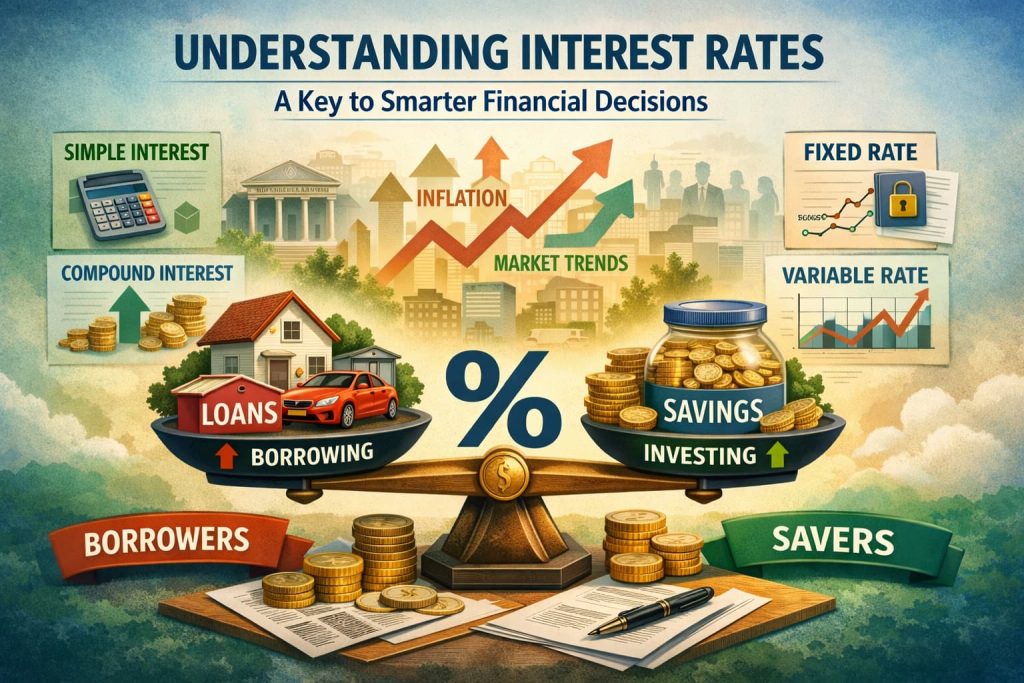
Understanding Interest Rates: A Key to Smarter Financial Decisions
Interest rates are at the heart of every financial decision whether you are saving, borrowing, or investing. Many individuals interact with interest daily without fully understanding how it works or how it affects their financial growth. In this article, we will explore what interest rates are, types of interest rates, factors that influence them, how they affect borrowers and savers, and how understanding interest rates can help members of VETLEP make smarter financial decisions.
What Are Interest Rates?
An interest rate is the cost of borrowing money or the reward for saving it, usually expressed as a percentage of the principal over a specific period.
- For borrowers, it is the extra amount paid on top of the loan.
- For savers/investors, it is the return earned on deposited funds.
For example, if you borrow ₦100,000 at a 10% interest rate, you will repay ₦110,000 after the agreed period (depending on the structure).
Types of Interest Rates
1. Simple Interest
This is calculated only on the original principal.
Formula:
Simple Interest = Principal × Rate × Time
It is straightforward and commonly used in short-term loans.
2. Compound Interest
This is calculated on both the principal and accumulated interest over time.
- It allows money to grow faster.
- It is commonly used in savings and long-term investments.
3. Fixed Interest Rate
- Remains constant throughout the loan period.
- Provides stability and predictability in repayments.
4. Variable Interest Rate
- Fluctuates based on market conditions.
- Can increase or decrease over time.
Factors That Influence Interest Rates
Several factors determine how interest rates are set:
- Inflation: Higher inflation often leads to higher interest rates.
- Central Bank Policies: Institutions like the Central Bank regulate lending rates.
- Credit Risk: Higher risk borrowers are charged higher interest.
- Loan Duration: Longer loans may have higher rates.
- Market Demand and Supply: More demand for loans can push rates up.
How Interest Rates Affect Borrowers and Savers
For Borrowers
- Higher interest rates mean higher repayment amounts.
- Lower rates make borrowing more affordable.
For Savers
- Higher interest rates increase returns on savings.
- Lower rates reduce earnings from deposits.
Why Understanding Interest Rates Matters
Understanding interest rates helps individuals:
- Make informed borrowing decisions
- Avoid over-indebtedness
- Plan repayments effectively
- Maximize savings and investment returns
- It also helps in comparing different financial products before committing.
Interest Rates and Financial Discipline in VETLEP
At VETLEP, interest rates are not just numbers they are part of a structured system designed to promote financial responsibility, accessibility, and sustainability.
1. Transparent Loan Structure
VETLEP ensures that members clearly understand the interest attached to any loan before disbursement. This transparency builds trust and prevents misunderstandings.
2. Encouraging Timely Repayment
Interest serves as a motivation for timely repayment. Members who repay on time avoid additional financial pressure and maintain good standing within their groups.
3. Promoting Group Accountability
Since VETLEP operates on group-based lending, understanding interest rates helps all members appreciate the importance of collective responsibility. One member’s delay can affect the group’s ability to access future loans.
4. Supporting Financial Growth
Proper understanding of interest helps members use loans productively whether for business, education, or personal development ensuring that borrowed funds generate value beyond the cost of interest.
5. Building Financial Literacy
VETLEP goes beyond lending by educating members on financial concepts like interest rates, enabling them to make smarter financial decisions even outside the platform.
Practical Tips for Managing Interest Rates
- Always calculate total repayment before taking a loan
- Choose loan terms that match your income flow
- Avoid unnecessary borrowing
- Prioritize timely repayment to reduce financial stress
- Use loans for income-generating activities when possible
Conclusion
Interest rates are a fundamental aspect of financial life that everyone must understand. Whether you are borrowing or saving, knowing how interest works empowers you to make better financial decisions, avoid pitfalls, and grow your resources effectively. At VETLEP, this knowledge becomes even more important, as it directly impacts not just individual members but entire groups. By understanding and managing interest wisely, members can unlock greater financial stability, trust, and long-term success.
References
- Mishkin, F. S. (2019). The Economics of Money, Banking, and Financial Markets. Pearson.
- Mankiw, N. G. (2021). Principles of Economics. Cengage Learning.
- Central Bank of Nigeria (CBN). (2023). Monetary Policy Guidelines.
- (2024). Interest Rate Definition and Types.
- World Bank. (2022). Financial Literacy and Inclusion Report.