
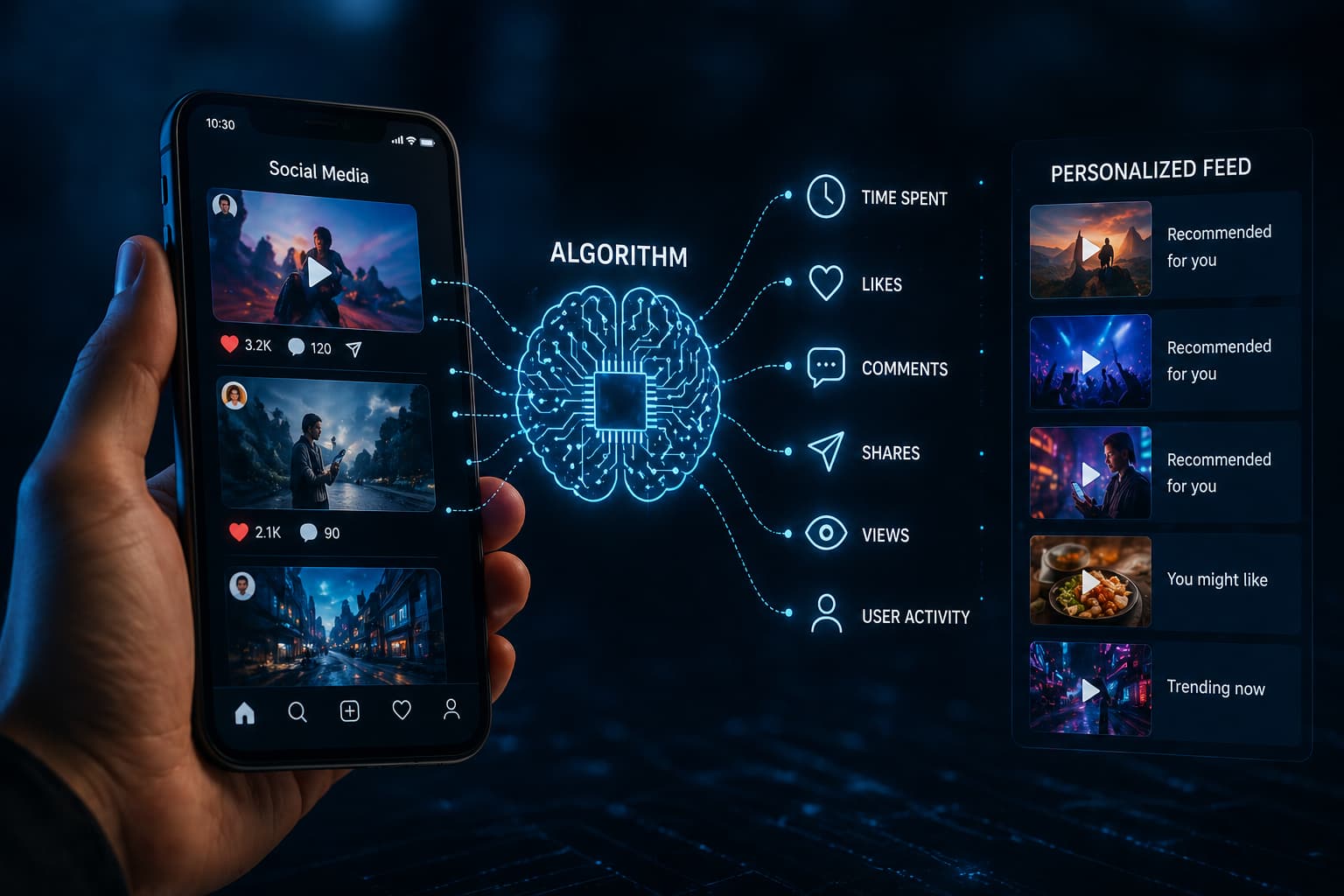
Attributes of Social Media Influence on Human Behavior
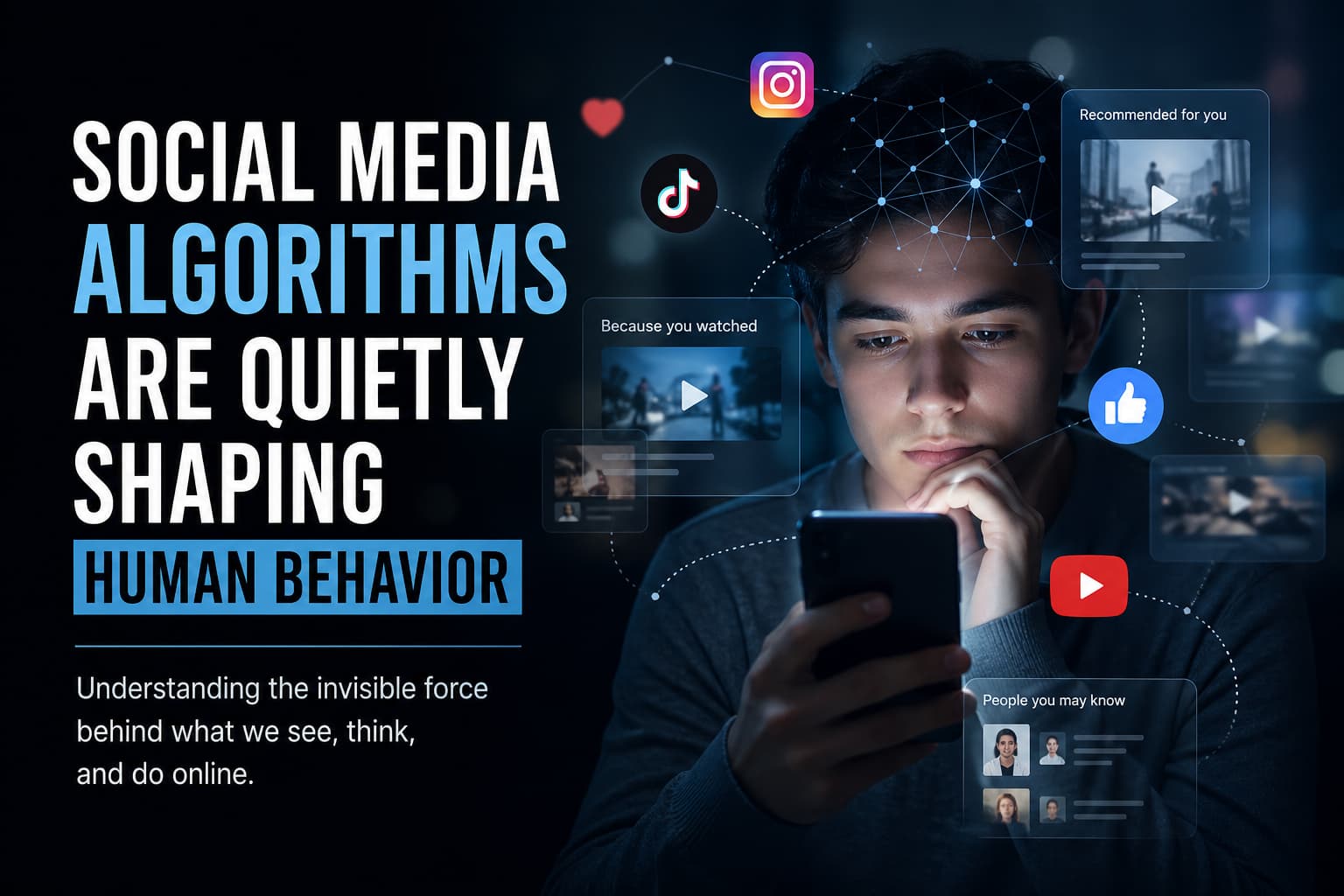
Understanding Social Media Algorithms
Social media algorithms are systems designed to analyze user activity and deliver content that is most likely to keep users engaged.They monitor patterns such as what you watch, how long you stay on a post, what you like, and what you ignore. Using this information, they build a personalized feed tailored to your interests.This personalization creates a smooth and engaging experience. However, it also means that your exposure to information is being filtered.Instead of seeing a wide range of content, you begin to see a refined version of the internet—one that reflects your past behavior rather than the full reality.
Understanding Behavioral Influence
Human behavior is shaped by repeated exposure.
What people see frequently begins to influence how they think and respond.On social media, this process is continuous. When certain types of content appear regularly, they gradually become familiar and accepted.For example, repeated exposure to a specific opinion or lifestyle can make it seem more common or valid than it actually is. Over time, users may begin to align their thoughts and actions with what they consistently see.This is how influence develops not through force, but through repetition.
The Feedback Loop Effect
Social media algorithms operate through a feedback loop that strengthens user behavior over time.When a user interacts with a type of content, the system responds by showing more of it. As the user continues to engage, the algorithm becomes more confident in that preference and further reinforces it.This cycle continues, gradually narrowing the range of content the user sees.As a result, users are often exposed to similar ideas repeatedly, while alternative perspectives become less visible. This limits exploration and strengthens existing patterns of thinking.
The Key Difference
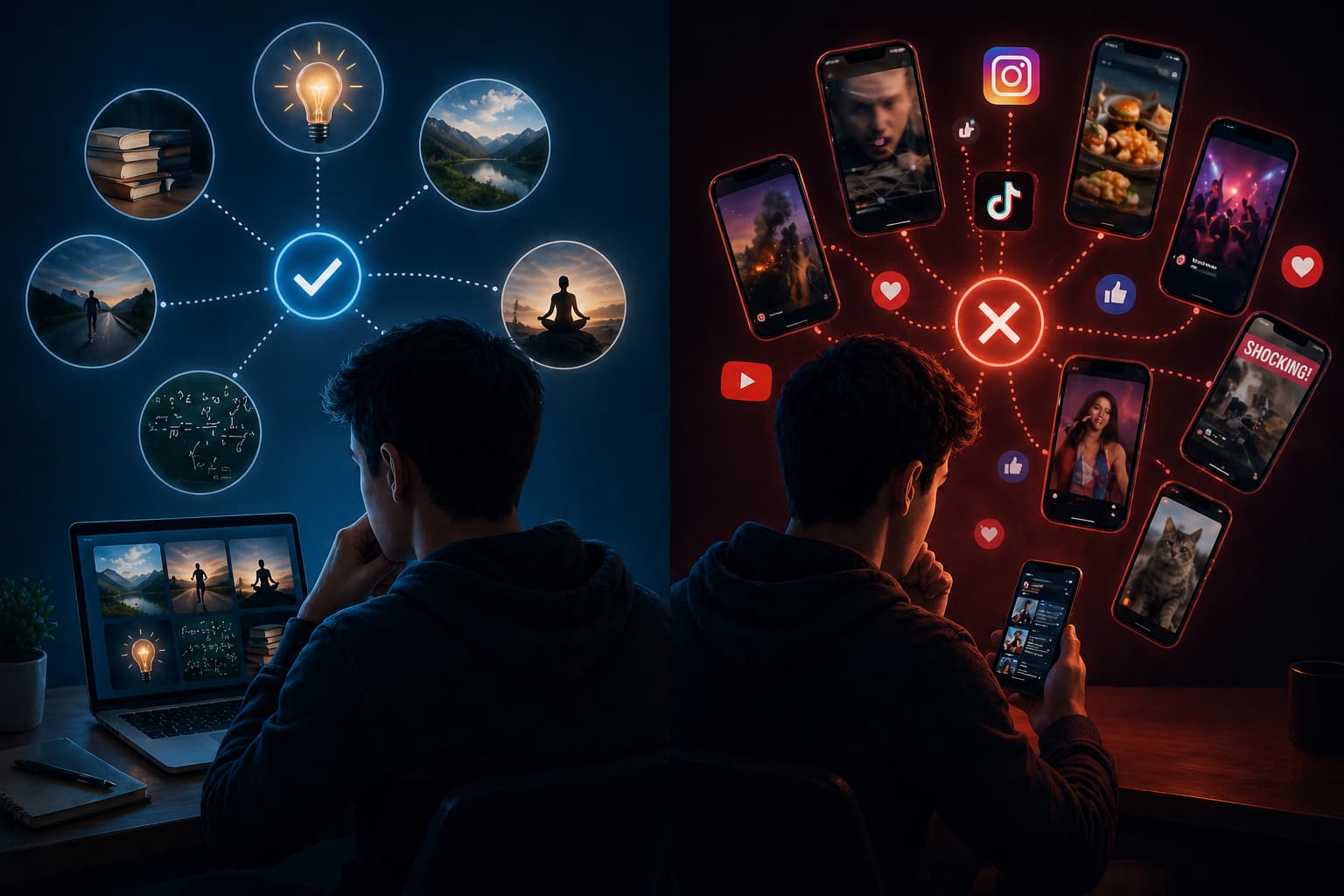
There is an important difference between actively using social media and being influenced by it.Active use involves making deliberate choices about what to watch or engage with. In contrast, algorithm-driven use relies on what is automatically presented to the user.When content is continuously selected by the system, user behavior becomes more reactive than intentional.What appears to be free choice may, in reality, be guided exposure.
How to Stay in Control as a User
Maintaining control begins with awareness. Understanding how algorithms work helps users make more intentional choices.Users can take simple steps such as being mindful of their interactions, actively seeking diverse content, and setting limits on screen time.Taking short breaks while scrolling and questioning why certain content appears can also reduce passive consumption.By making conscious decisions, users can shift from being guided by algorithms to using social media with purpose.