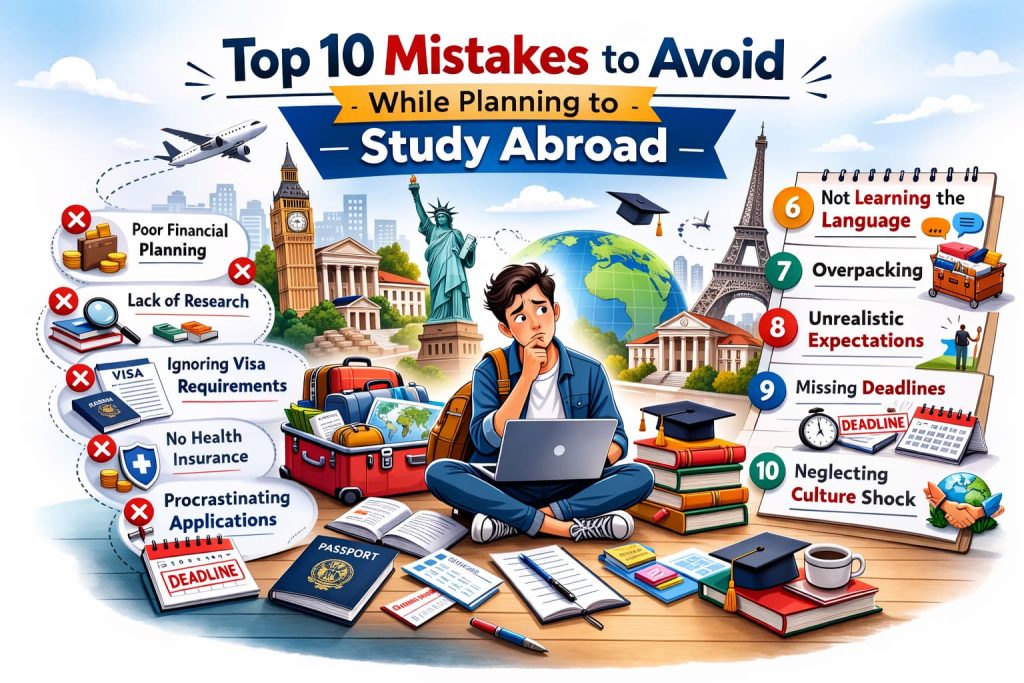
Top 10 Mistakes to Avoid While Planning to Study Abroad
Applying for study abroad programs (whether short-term exchanges, semester/year programs, or full degree pursuits abroad) is an exciting but detail-heavy process. Many students unintentionally sabotage their chances through avoidable errors. Drawing from expert advice, admissions insights, and common experiences shared by applicants, here are the Top 10 Mistakes to Avoid with clear explanations and practical ways to steer clear of them.
1. Starting the Process Too Late (Procrastination)
Many applicants underestimate how long the entire timeline takes from research and test prep to gathering documents, writing essays, securing recommendations, and handling visas. Deadlines for popular programs can be 8 -12 months in advance, and visa processing often adds 1-6 months.
How to avoid it: Create a reverse timeline. Start at least 12–18 months before your intended start date. Set monthly milestones (e.g., complete language tests by month 3, draft essays by month 6).
2. Choosing the Wrong Program or University
Picking a program based only on prestige, friends’ choices, or “cool” location without checking if it aligns with your academic goals, career plans, credit transfer rules, teaching style, or living environment often leads to regret, poor performance, or the need to transfer.
How to avoid it: Research thoroughly: read program curricula, check rankings for your field, review alumni outcomes, contact current/former students, and ensure credits will transfer back home if it’s an exchange. Ask: Does this fit my major, budget, and personal growth?
3. Submitting Incomplete or Inaccurate Applications
Missing documents (transcripts, test scores, recommendation letters, passport copy), using outdated versions, typos in names/dates, wrong file formats, or unofficial screenshots are among the most frequent reasons for automatic rejection or delays.
How to avoid it: Use the university/program’s official checklist. Double-check every entry, scan documents professionally, and submit everything in one go. Get a second pair of eyes (mentor/parent) to review before hitting submit.
4. Writing a Generic or Weak Statement of Purpose / Motivation Letter / Essay
Sending the same cookie-cutter personal statement to every program fails to show genuine interest or fit. Admissions committees spot recycled content instantly, and vague essays don’t stand out.
How to avoid it: Tailor each essay mention specific courses, professors, research opportunities, or aspects of the university/country that excite you. Be authentic: explain your “why” clearly, link past experience to future goals, and show how the program bridges them.
5. Ignoring or Underestimating Standardized Tests and Language Requirements
Not preparing early for IELTS/TOEFL/Duolingo, GRE/GMAT (if needed), or assuming “good English” is enough then rushing and scoring below requirements.
How to avoid it: Check exact score minimums early (they vary by country/program). Book tests 4–6 months ahead, prepare seriously (practice tests, courses if needed), and retake if scores are borderline.
6. Poor Financial Planning and Underestimating Costs
Forgetting hidden expenses (application fees, visa fees, health insurance, travel, living costs beyond tuition) or failing to show sufficient funds for visa purposes leads to stress, debt, or visa denials.
How to avoid it: Build a realistic budget early (use official cost-of-living calculators from universities or sites like Number). Secure funding proof (bank statements, sponsor letters, scholarships) well before visa stage. Apply for every scholarship/funding option you qualify for.
7. Overlooking or Delaying Visa and Passport Requirements
Assuming visa is “easy” or waiting until after admission then facing long wait times, missing documents, or passport expiry issues (many countries require 6+ months validity beyond stay).
How to avoid it: Research visa rules for your nationality + destination country immediately after short listing programs. Renew passport early if needed. Start visa prep (financial docs, acceptance letter, etc.) right after receiving offer.
8. Neglecting Scholarships, Funding, and Financial Aid Opportunities
Many strong applicants miss out on scholarships because they don’t apply separately or assume admission = funding.
How to avoid it: Search university-specific, government (e.g., Chevening, DAAD, Fulbright), and external scholarships early many have earlier deadlines than admissions. Prepare strong applications for them alongside program apps.
9. Not Preparing Strong Recommendation Letters
Choosing recommenders who don’t know you well, giving them no guidance, or asking at the last minute results in generic or weak letters.
How to avoid it: Select people who can speak specifically to your academic abilities/motivation (professors, supervisors). Provide them your CV, program details, and reminders about key achievements. Request letters 2–3 months in advance.
10. Failing to Proofread and Seek Feedback
Typos, grammatical errors, inconsistent information across documents, or not getting external feedback can make even qualified applicants look careless.
How to avoid it: Proofread multiple times (aloud helps). Use tools like Grammarly, but don’t rely solely on them. Ask teachers, mentors, or education consultants for honest feedback. Take breaks between writing and reviewing.
Bonus tip: Keep organized records (spreadsheet of deadlines, logins, document versions) and back everything up. If possible, consult reputable education advisors for complex cases, but always verify their advice against official sources.
Avoiding these pitfalls dramatically increases your chances of acceptance and a smooth process. Start early, stay organized, and be thorough your future self (and dream program) will thank you!
Good luck!