
How to Beat A Level Exam Stress: Expert Advice
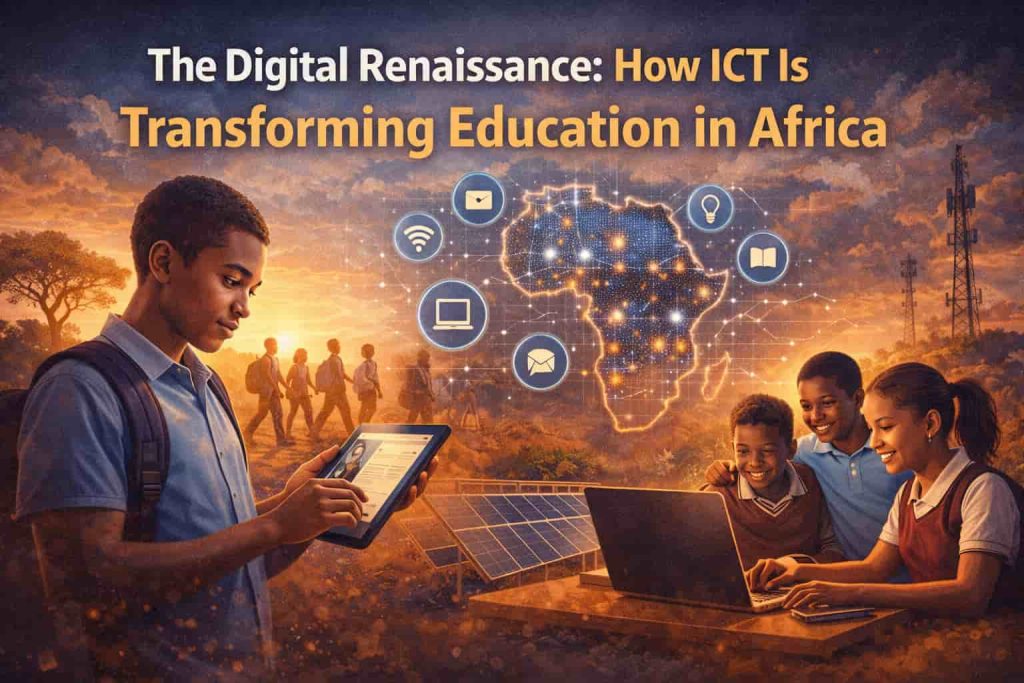
Africa is a continent brimming with potential, and at the heart of its development lies education. For decades, challenges such as limited resources, geographical barriers, and a shortage of qualified teachers have hindered progress. However, the rapid expansion of Information and Communication Technology (ICT) is dramatically reshaping the educational landscape. As of 2026, the African e-learning market is projected to surpass $5 billion, reflecting a fundamental shift from traditional classrooms to digital ecosystems.
- Bridging the Access Gap: The Mobile Revolution
One of the most significant impacts of ICT is its ability to bridge the access gap. In remote areas where physical schools are scarce, digital platforms have become game-changers. Africa has bypassed the era of the desktop computer, moving straight to a mobile-first approach.
- Ubiquity of Smart phones:With over 500 million mobile internet users in Sub-Saharan Africa, the smart phone is now a portable classroom. Platforms like Eneza Education and uLesson deliver curriculum-aligned content via low-bandwidth apps and even SMS, ensuring that learners in rural villages have the same quality of materials as those in urban hubs like Lagos or Nairobi.
- Satellite and Offline Solutions:The integration of satellite internet (such as Star link) and offline tools like RACHEL (Remote Area Community Hotspot) allows schools without stable electricity or internet to access massive digital libraries. This “leapfrogging” ensures that geography is no longer a destiny for African students.
- Enhancing Learning Through AI and Gamification
ICT does not just provide access; it enriches the quality of learning. Traditional “chalk-and-talk” methods are being replaced by interactive content that caters to diverse learning styles.
- Adaptive Learning:Artificial Intelligence (AI) now provides personalized pathways for students. If a student struggles with a specific concept, AI-driven platforms adjust the difficulty in real-time. In 2024, the African Union’s Continental AI Strategy prioritized education, fostering tools that translate lessons into local languages like Swahili and Yoruba.
- Virtual Labs:In Ghana and Kenya, students are using virtual reality (VR) and 3D simulations to conduct science experiments and explore human anatomy. This overcomes the lack of physical laboratory equipment and provides a safe, cost-effective way to gain practical STEM skills.
- Empowering Educators and Systemic Efficiency
Teachers are the primary catalysts of this transformation. ICT provides them with tools for professional development and classroom management that were previously unimaginable.
- Professional Development:Initiatives like the UNESCO-Korea Funds-in-Trust (KFIT) have trained thousands of teachers across Mozambique, Rwanda, and Tanzania in digital pedagogy. Educators now use platforms like WhatsApp and specialized Learning Management Systems (LMS) to share lesson plans and stay updated on global teaching standards.
- Data-Driven Management:Digital assessment tools allow for real-time tracking of student performance, enabling teachers to identify at-risk students earlier. This administrative efficiency allows educators to focus more on mentorship and less on paperwork.
- Fostering 21st-Century Skills
Integrating ICT into education inherently fosters digital literacy, a non-negotiable skill in the 2026 global economy.
- The Skills Gap:Beyond academic subjects, ICT programs are teaching coding, data science, and critical thinking. Organizations like Moringa School are training African youth for the “gig economy,” allowing them to compete for global tech roles from their home countries.
- Innovation-Driven Generation:By embracing these tools, African educational systems are preparing a generation equipped to solve local problems with global technology, driving the continent’s “Fourth Industrial Revolution.”
- Challenges and the Path to 2030
While the progress is undeniable, the “Digital Divide” remains a reality. High data costs, inconsistent power, and the need for more localized content are persistent hurdles. However, the African Union’s “Digital Education Strategy” aims to connect at least 50% of educational institutions to high-speed internet by 2027.
The future of education in Africa is no longer a distant dream but a digital reality. By continuing to invest in infrastructure and teacher training, Africa is poised to unlock the full potential of its youngest generations, turning the “cradle of humanity” into a global hub of digital innovation.
References
- African Union (2024).Continental Artificial Intelligence Strategy and Digital Education Strategy Implementation Plan. * UNESCO (2025). ICT Transforming Education in Africa: Phase III Progress Report (Namibia, Tanzania, and Uganda).
- DigitalDefynd (2025).Africa EdTech Facts & Statistics: Projections for 2025–2033. * World Economic Forum (2025). Empowering Africa’s Youth Through Education and Technology. * GSMA (2024). The State of Mobile Internet Connectivity in Sub-Saharan Africa.
- United Nations (2024).Transforming Education in Africa by Leveraging Innovative Finance and the Digital Revolution.
1. Accept That Some Stress Is Normal
First, let’s be clear — exam nerves show you care. According to the UK’s National Health Service (NHS), mild stress can actually help students stay alert and motivated. The key is to prevent it from snowballing.
2. Plan Early, Study Smart
Procrastination is the stress multiplier. Break your revision into manageable chunks. Make a daily timetable, with clear targets for each session. Technique: study for 25 minutes, take a 5-minute break. Repeat.
3. Use Active Revision Techniques
Don’t just read and highlight endlessly — it’s inefficient. Instead:
- Summarize key points in your own words.
- Use past papers under timed conditions.
- Teach the topic to someone else — it reveals gaps.
This active approach builds true understanding and confidence.
4. Stay Healthy — It’s Not Optional
A tired, hungry student is a stressed student. Prioritize:
- Sleep:7–8 hours minimum.
- Food:Balanced meals, not just energy drinks and snacks.
- Exercise:A daily walk or short workout releases feel-good hormones that lower anxiety.
5. Take Breaks & Keep Perspective
Make time to relax. Talk to friends. Watch a show. Laugh. You’re not a robot. As the University of Cambridge advises, “It’s not just about the hours you put in — it’s about how effective and balanced you are.
6. Ask for Help If You Need It
There’s no shame in struggling. Talk to your teachers, your parents, or a school counsellor. Many colleges now offer wellbeing support or peer mentoring for A Level students.
Final Words
You are not alone. Thousands have gone through this — and emerged stronger, wiser, and ready for the next step. Take it day by day, and trust the process.
References
- (2022). Exam stress.www.nhs.uk/mental-health/children-and-young-adults/advice-for-parents/exam-stress/
- University of Cambridge. (2023). Managing exam stress.cam.ac.uk/study/examstress