
Smart Learning vs Traditional Learning Abroad
Smart Learning vs Traditional Learning Abroad: Which Approach Better Prepares Students for the Future?
In today’s digital age, education is rapidly changing to meet the demands of a technology-driven world. Smart learning uses digital tools and flexible learning methods, while traditional learning relies on classroom-based instruction and direct teacher-student interaction. As students prepare for future careers and global opportunities, understanding which approach better equips them with the necessary skills and knowledge has become increasingly important.
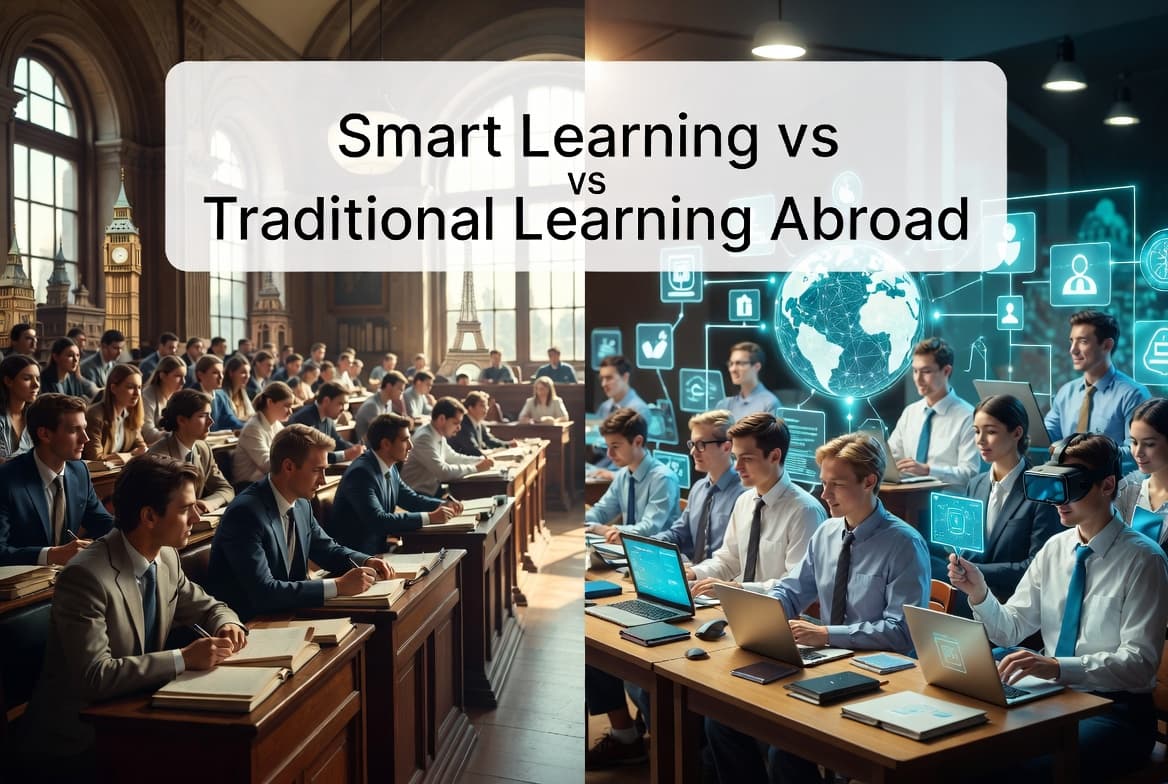
The global education landscape is undergoing a significant transformation. For decades, traditional learning methods dominated classrooms across the world, emphasizing face-to-face instruction, fixed curricula, and standardized teaching approaches. However, the rise of digital technologies has introduced smart learning, a more flexible and technology-driven model that is reshaping how students learn, especially in international education environments.
Understanding Traditional Learning
Traditional learning refers to the conventional classroom model where teaching is conducted primarily through face-to-face interactions between instructors and students. Lessons follow a predetermined schedule, and students typically learn the same content at the same pace.
Advantages of Traditional Learning:
• Strong social interaction
• Structured learning environment
• Immediate feedback
• Access to campus resources
Challenges of Traditional Learning:
• Limited flexibility in learning schedules
• Higher costs associated with physical attendance
• Difficulty accommodating different learning speeds
Understanding Smart Learning
Smart learning is an educational approach that uses digital technologies, artificial intelligence, data analytics, and online platforms to create personalized and flexible learning experiences.
Advantages of Smart Learning:
• Personalized learning
• Greater flexibility
• Improved accessibility
• Enhanced engagement
• Data-driven support
Challenges of Smart Learning:
• Dependence on internet connectivity and devices
• Reduced face-to-face interaction
• Requirement for strong self-discipline
The International Education Perspective
Universities around the world are increasingly adopting hybrid models that combine the strengths of both approaches. Students benefit from both the social advantages of traditional learning and the flexibility of smart learning technologies.
Which Approach Is Better?
The future of education lies not in choosing one approach over the other but in combining both. Traditional learning provides structure and human connection, while smart learning offers flexibility, personalization, and accessibility.
Conclusion
As global education continues to evolve, smart learning is becoming an essential component of international study programs. Students planning to study abroad should seek institutions that successfully combine both approaches. The future of international education is not smart learning versus traditional learning—it is the intelligent integration of both to create richer, more effective, and more inclusive learning experiences.