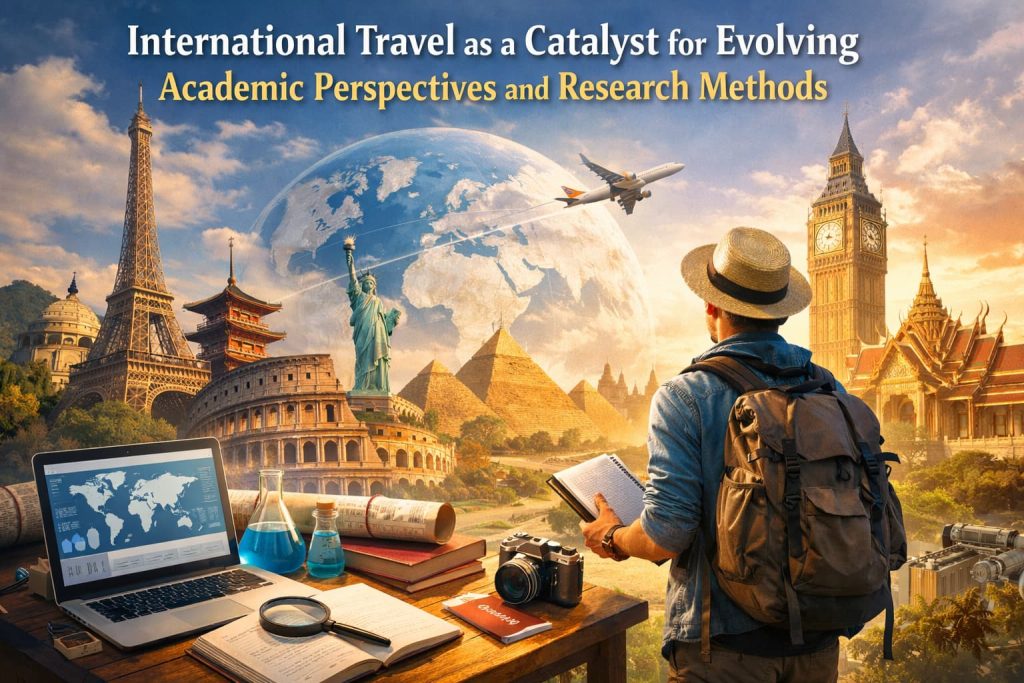
International Travel as a Catalyst for Evolving Academic Perspectives and Research Methods
In today’s interconnected world, academic excellence is no longer confined within the walls of a single institution or country. From climate change to rapid technological disruption, global challenges demand global thinking. One of the most powerful yet often underestimated tools for developing such thinking is international travel. Far beyond leisure, it serves as a transformative experience that reshapes how scholars think, question, and conduct research.
Whether through academic conferences, fieldwork, collaborative projects, or study abroad programs, crossing borders introduces scholars to new methodologies, diverse cultures, and real-world complexities. These experiences do not just complement academic work, they fundamentally enhance it.
Expanding Intellectual Horizons
One of the most significant impacts of international travel is its ability to challenge deeply held assumptions. Scholars who engage with different academic systems quickly realize that ideas considered “universal” may, in fact, be shaped by cultural and institutional contexts.
Exposure to diverse environments fosters cognitive flexibility i.e the ability to adapt, integrate multiple viewpoints, and generate innovative ideas. Research has consistently shown that individuals who study or work abroad develop broader worldviews and enhanced critical thinking skills.
Enhancing Research Quality and Methodology
International travel improves the depth and quality of research by providing access to unique resources and perspectives. Contextual understanding becomes richer when researchers observe real life applications of theories within communities.
Exposure to different research traditions also promotes methodological diversity. Combining quantitative, qualitative, and interdisciplinary approaches often leads to more robust and innovative outcomes.
Personal Growth and Academic Excellence
Beyond intellectual benefits, international travel contributes significantly to personal development. It builds resilience, adaptability, and problem solving skills, all of which are essential in academic research.
Intercultural competence has become increasingly important in global academic collaborations. Scholars who engage internationally are better equipped to work effectively across cultures.
Conclusion
International travel is more than a personal experience—it is a strategic investment in academic growth. It enhances perspective, strengthens research, and fosters meaningful collaborations.