How International Travel Builds Cultural Intelligence and Reduces Prejudice in a Divided World
Introduction
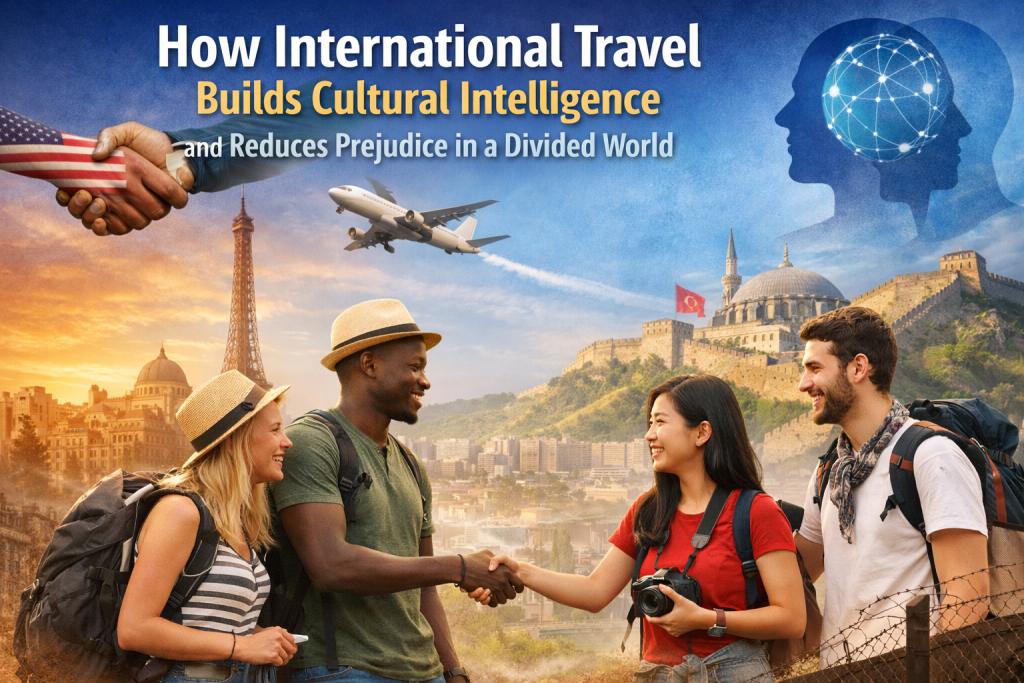
In an era marked by rapid globalization, digital connectivity, and yet deepening divisions fueled by geopolitical tensions, misinformation, and cultural echo chambers, international travel emerges as a powerful antidote to narrow-mindedness. Far from mere tourism or leisure, travel abroad serves as intentional immersion in unfamiliar cultures, societies, and ways of life. It fosters cultural intelligence and actively reduces prejudice by replacing stereotypes with firsthand human connections.
This is especially relevant in today’s world, where international tourist arrivals reached an estimated 1.52 billion in 2025 and global student mobility trends toward broader destinations beyond traditional hubs. For individuals from emerging economies like Nigeria, where access to global opportunities can transform lives, travel abroad bridges local realities with broader horizons. It challenges assumptions, builds empathy, and cultivates a sense of shared humanity amid a world that often feels fragmented. This essay explores how international travel develops cultural intelligence, diminishes prejudice, and why it remains essential for personal growth and societal harmony today.
Body
International travel abroad profoundly shapes individuals by enhancing cultural intelligence and dismantling prejudice. The following key points illustrate this transformative process, supported by research and real-world insights:
Building Cultural Intelligence Through Immersion and Adaptation:
Travel forces direct engagement with new norms, values, languages, and social cues, developing the four dimensions of cultural intelligence: cognitive (knowledge of cultures), metacognitive (awareness and planning), motivational (drive to engage), and behavioral (adapting actions). Studies from 2020 to 2026 show that short-term overseas programs and international experiences significantly boost cultural knowledge and overall CQ, with notable gains in adaptability and empathy. For example, research on expatriates and students highlights that multicultural exposure especially in non-Anglo or diverse settings predicts higher CQ levels as individuals learn to navigate ambiguity and collaborate across differences. In practice, this means a traveler from Lagos might gain confidence in multicultural teams, a skill highly valued in global industries like tech and creative fields.
Reducing Prejudice Via Authentic Human Contact
Preconceptions often stem from media, limited exposure, or inherited biases; travel replaces these with real interactions, humanizing “the other.” Mark Twain’s famous observation—“Travel is fatal to prejudice, bigotry, and narrow-mindedness”—has been empirically supported: multicultural experiences increase openness to experience (a personality trait linked to lower prejudice) and reduce ethnic or intercultural bias. Intergroup contact theory reinforces this—positive, equal-status interactions abroad foster tolerance and lessen stereotyping. Surveys and studies (e.g., from business travelers and students) show 87% reporting greater empathy, with direct contact challenging unconscious biases more effectively than virtual means.
Overcoming Challenges to Maximize Benefits
While powerful, travel’s impact depends on depth of engagement superficial tourism may reinforce stereotypes, whereas meaningful immersion (e.g., homestays, volunteering, or collaborative projects) yields the strongest reductions in prejudice. For Nigerians, barriers like visa restrictions, costs, and safety concerns exist, yet overcoming them builds extra resilience. Events like the Exposure International Photography Festival in Sharjah provide accessible entry points: traveling there exposes creatives to diverse global narratives on identity and society, sparking collaborations that transcend borders and biases.
Broader Societal and Personal Outcomes
These experiences promote global citizenship—a mindset valuing humanity beyond national lines essential for tackling shared issues like climate change or inequality. Travelers often return with heightened self-awareness, maturity, and networks that enhance employability (e.g., higher salaries and faster career progression in diverse workplaces).
Conclusion
In today’s interconnected yet polarized world, international travel remains a vital pathway from local roots to global perspectives. By cultivating cultural intelligence through immersion and directly reducing prejudice via authentic human encounters, it equips individuals with empathy, adaptability, and a broader worldview that digital exposure alone cannot match.
For those in emerging contexts like Nigeria, the rewards—personal transformation, professional edge, and contributions to a more tolerant society far outweigh the barriers. As global mobility grows, embracing travel abroad is not just enrichment, it is a deliberate act of broadening horizons and fostering understanding in a divided era. Those who venture forth return not only changed but empowered to bridge divides, making the world feel smaller, kinder, and more connected.