
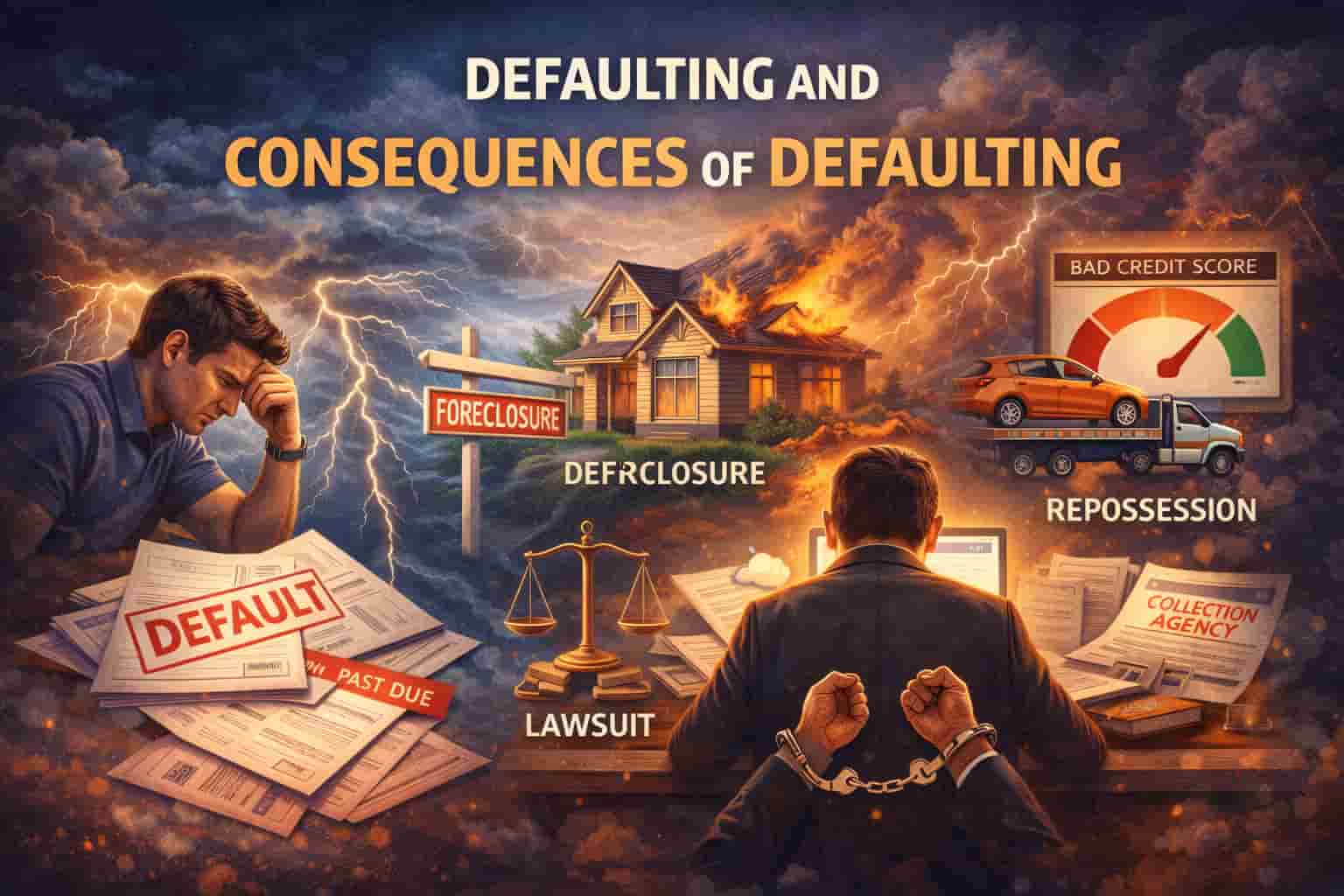
what is defaulting?
Defaulting is the failure of a borrower to meet the legal obligations of a loan agreement, most commonly by missing scheduled repayments of principal or interest for a specified period. When a borrower defaults, the lender gains the right to take corrective actions outlined in the loan contract, which may include penalties, legal action, or recovery of pledged collateral.
The Consequences of Defaulting as a Borrower
Borrowing plays a vital role in personal and business finance, enabling individuals and organizations to meet immediate needs, invest, or grow. However, borrowing comes with responsibility. When a borrower fails to honor repayment terms, the consequences of defaulting can be severe, long-lasting, and far-reaching. Understanding these consequences is critical for making informed financial decisions and protecting long-term financial stability.
- Damage to Credit History and Credit Score
One of the earliest and most significant consequences of defaulting is the negative impact on a borrower’s credit profile. Lenders report missed payments and defaults to credit bureaus, which can drastically reduce credit scores.
A poor credit score makes it difficult to:
Secure future loans or credit facilities
Access competitive interest rates
Rent property or pass financial background checks
In many cases, the effects of a default remain on a credit report for several years, even after the debt is settled.
- Increased Financial Costs
Defaulting often triggers additional costs beyond the original loan amount. These may include:
Late payment fees
Default penalties
Higher interest rates (especially on variable-rate loans)
As these charges accumulate, the total debt burden increases, making repayment even more challenging and potentially trapping the borrower in a cycle of debt.
- Legal Action and Debt Recovery
When informal recovery efforts fail, lenders may pursue legal remedies. This can involve:
Court judgments
Wage garnishment (where applicable by law)
Freezing of bank accounts
Legal proceedings not only increase financial strain through legal fees but also expose the borrower to reputational and emotional stress.
- Loss of Collateral and Assets
For secured loans such as mortgages, car loans, or asset-backed business loans defaulting can lead to repossession or foreclosure. The lender has the legal right to seize and sell the pledged asset to recover the outstanding debt.
This can result in:
Loss of a home, vehicle, or business equipment
Disruption to personal life or business operations
Often, the sale of the asset may not fully cover the debt, leaving the borrower still liable for the balance.
- Limited Access to Future Financial Opportunities
A history of default signals high risk to lenders, employers, and even business partners. As a result, borrowers may face:
Rejection of future loan applications
Requirement for guarantors or collateral
Higher insurance premiums
For entrepreneurs, defaulting can restrict access to business funding, slowing growth or forcing closure.
- Psychological and Social Impact
Beyond financial consequences, defaulting can take a heavy emotional toll. Borrowers may experience:
Anxiety and stress
Loss of confidence
Strained personal or professional relationships
Financial distress often affects productivity, decision-making, and overall well-being, compounding the negative effects of default.
- Broader Economic Implications
At a macro level, widespread loan defaults can weaken financial institutions and reduce lending activity. This can slow economic growth, increase unemployment, and reduce overall financial confidence demonstrating that defaulting affects not just individuals, but the broader economy as well.
CONCLUSION
Defaulting as a borrower is not merely a missed payment it is a serious financial event with lasting…consequences. From damaged credit and legal action to asset loss and emotional stress, the effects can follow a borrower for years. Responsible borrowing, clear financial planning, and early communication with lenders during financial hardship are essential steps in avoiding default and maintaining long-term financial health.
REFERENCES
World Bank Group – Credit Reporting and Financial Consumer Protection
International Monetary Fund (IMF) – Household Debt and Financial Stability
Investopedia – Loan Default: Definition and Consequences
Central Bank of Nigeria (CBN) – Consumer Credit Guidelines and Risk Management Frameworks
Experian & Equifax – Understa