
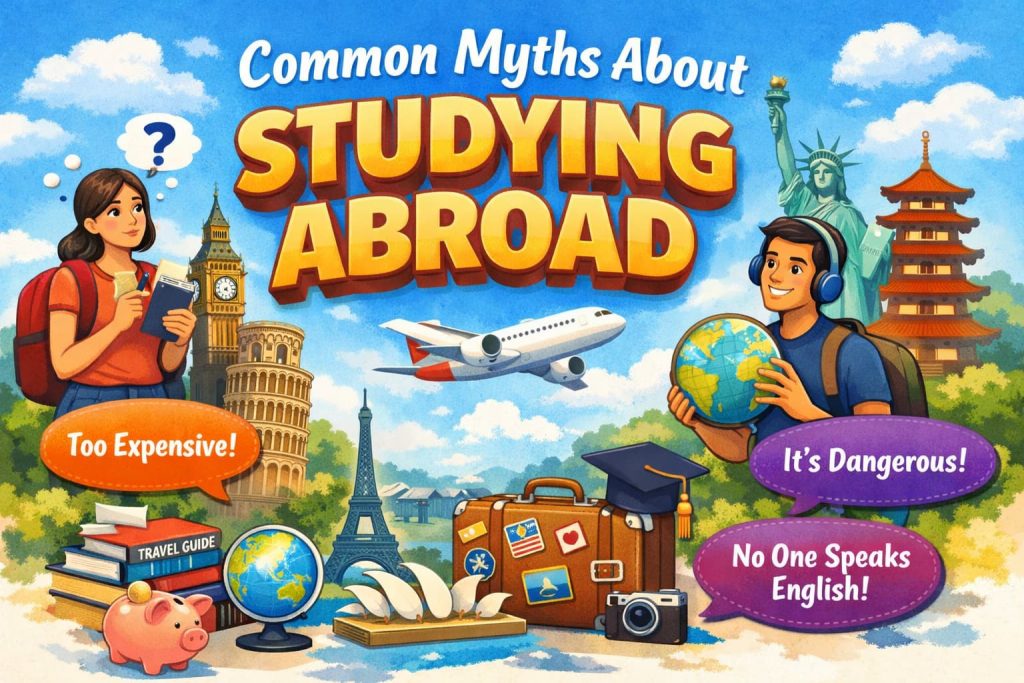
Common Myths About Studying Abroad
Introduction
“Studying abroad is a life-changing opportunity, but for many Nigerian students, myths and half-truths hold us back before we even apply. From ‘it’s only for the rich’ to ‘you’ll never get a job back home,’ these misconceptions are outdated or exaggerated. Let’s debunk the top 10 common ones so you can move forward with confidence in 2026!”
- Studying Abroad Is Only for Rich Families
Reality: While it’s an investment, it’s far more accessible than people think. Many countries (e.g., Germany, Norway, some programs in Canada/Australia) offer low or no tuition for international students. Scholarships like DAAD (Germany), (UK), MasterCard Foundation, or university-specific ones cover tuition, living costs, and even flights. For Nigerians, options like partial funding, work-study programs, or affordable destinations in Eastern Europe/Asia keep total costs comparable to (or lower than) private university in Nigeria over time. Start with realistic budgeting many returnees say the ROI in skills and networks pays off quickly.
- You Need Perfect Grades or Super-High Test Scores to Get In
Reality: Top universities want well-rounded applicants, not just straight A’s. A solid 2.1 or upper second-class degree, good personal statement, recommendations, and relevant experience often matter more than perfect scores. Many programs accept average GPAs with strong motivation letters. Tests like IELTS/TOEFL have flexible score requirements, and some universities waive them or accept alternatives (Duolingo English Test). Nigerian students get admitted every year without 700+ GMAT equivalents or 90%+ marks—focus on your story!
- You Must Speak the Local Language Fluently
Reality: English-taught programs dominate in popular destinations (UK, Ireland, Netherlands, Germany, Singapore, Australia). Even in non-English countries, many universities offer courses in English, especially at master level. Basic phrases help daily life, but immersion helps you learn quickly no prior fluency required for most programs.
- You’ll Never Graduate on Time or Transfer Credits Properly
Reality: With planning (course mapping + advisor approval), most students graduate on schedule or even early. Research shows Studying abroad participants often finish faster due to focus and motivation. Many Nigerian universities recognize international credits, especially from accredited programs. Choose programs with clear transfer policies to avoid issues.
- Studying Abroad Is Just a Long Vacation or Party
Reality: It’s immersive academics + cultural growth, not endless travel. You’ll attend classes, submit assignments, and balance responsibilities while exploring. The real value is independence, adaptability, and global perspective skills that make you stand out, not just fun stories.
- It’s Too Dangerous or Unsafe Right Now
Reality: Universities monitor safety closely and avoid high-risk areas (e.g., following government advisories). Millions study abroad safely each year. Personal precautions and university support (orientation, emergency contacts) keep risks low. Many Nigerian students thrive in welcoming countries without issues.
- You Won’t Make Friends or You’ll Feel Isolated
Reality: Studying abroad is one of the easiest ways to build a diverse network orientation weeks, clubs, dorms, and international student groups help you connect quickly. As a Nigerian, you’ll connect with other Africans, diaspora communities, and locals. Many return with lifelong friends from everywhere.
- A Foreign Degree Automatically Guarantees a Great Job Back Home
Reality: It boosts your chances significantly (better skills, networks, employability), but there is no “automatic” job. Combine it with internships, certifications, and knowledge of the Nigerian market. Returnees often land roles faster in tech, finance, oil/gas, consulting many companies value international exposure.
- Visa Rejection Is Inevitable for Nigerians
Reality: Rejections happen (often due to poor preparation), but strong applications succeed daily. Solid proof of fund, genuine intent (ties to Nigeria), good academics, and clear study plans improve odds. Use consultants wisely, apply early, and target student-friendly countries (e.g., Canada post-study work options, Germany straightforward process).
- It’s Too Late If You’re Not in Your Early 20’s or Junior Year
Reality: Programs exist for all ages/stages mature students, post grad, even gap-year options. Many Nigerians study abroad for master/PhD in their late 20’s/30’s. It’s never “too late”start whenever you’re ready.
Conclusion
“These myths keep too many talented Nigerian students on the sidelines. The truth? With research, planning, and persistence, studying abroad is achievable and transformative. What’s one myth that’s been holding you back? Drop it in the comments let’s discuss real experiences and tips!”